In many old homes coal fireplaces are abandoned. Pretty ornamental surrounds, summer covers and petite in scale. They are made to very specific specifications and are built very shallow so they cannot be converted to wood. Making them safe is more a labor of love than it is a useful undertaking. I accept the challenge because it was so important to the heating of the home – victorian innovation, stove and show piece. My house was built around it an it deserves to be operational.
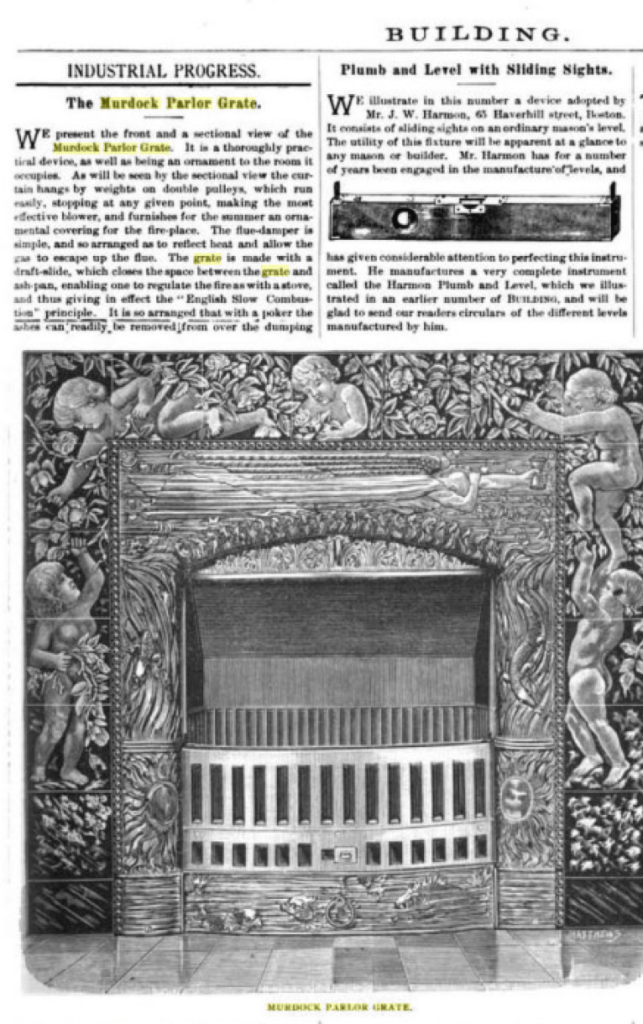
I continue to work on my plan to restore function to the fireplaces. I was wrapping up the final flue for the Murdock Coal Parlor Grate when we realized that more needed to be done if this was going to be made safe for usage. I mention previously that we had a blockage that lead us into the wall where we found a dangerous DIY project from the past to add a small stove in a second floor bedroom. This left a hole in the side of the chimney flue that could have been a disaster. As we pulled the liner down we got stuck at this point. We realized that without the ability to bring the liner down to the first floor we would not be able to make the grate safe. That was something I should have understood but began to obsess on solutions. My plan was to disassemble the Murdock and this leads to a series of events best described as a pandoras box.
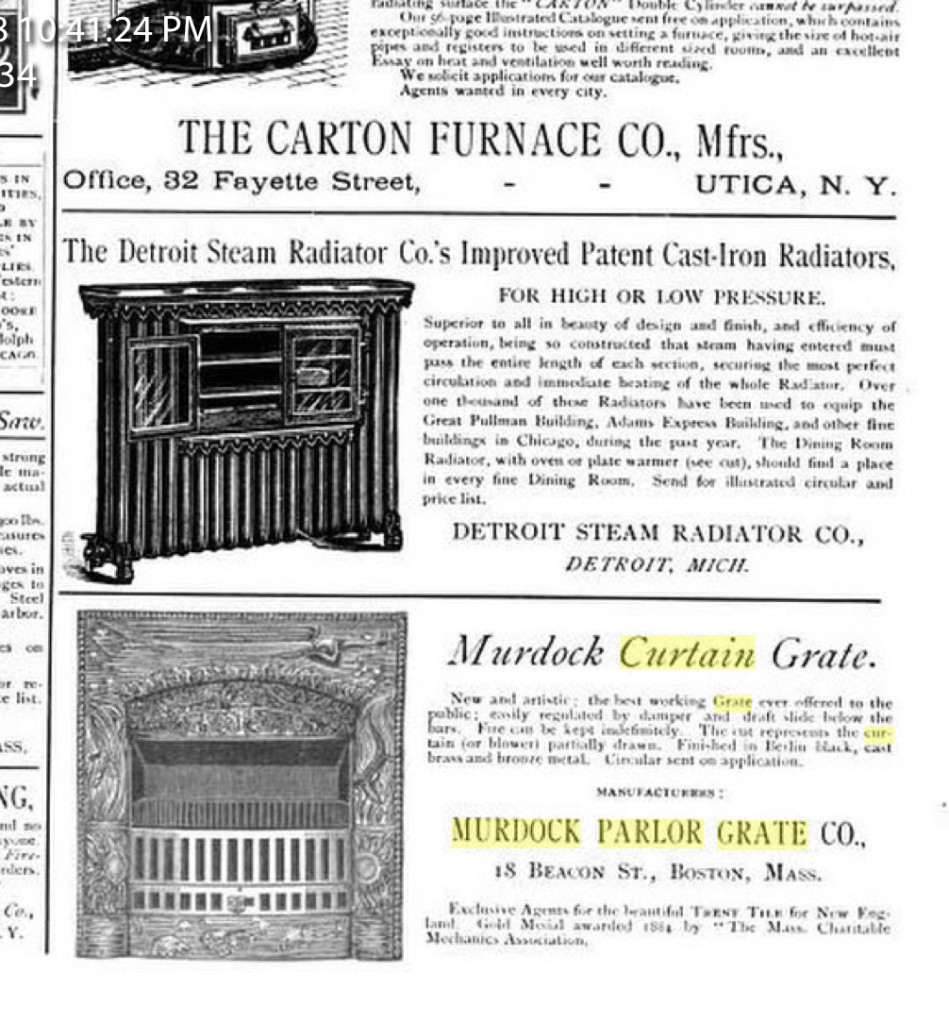
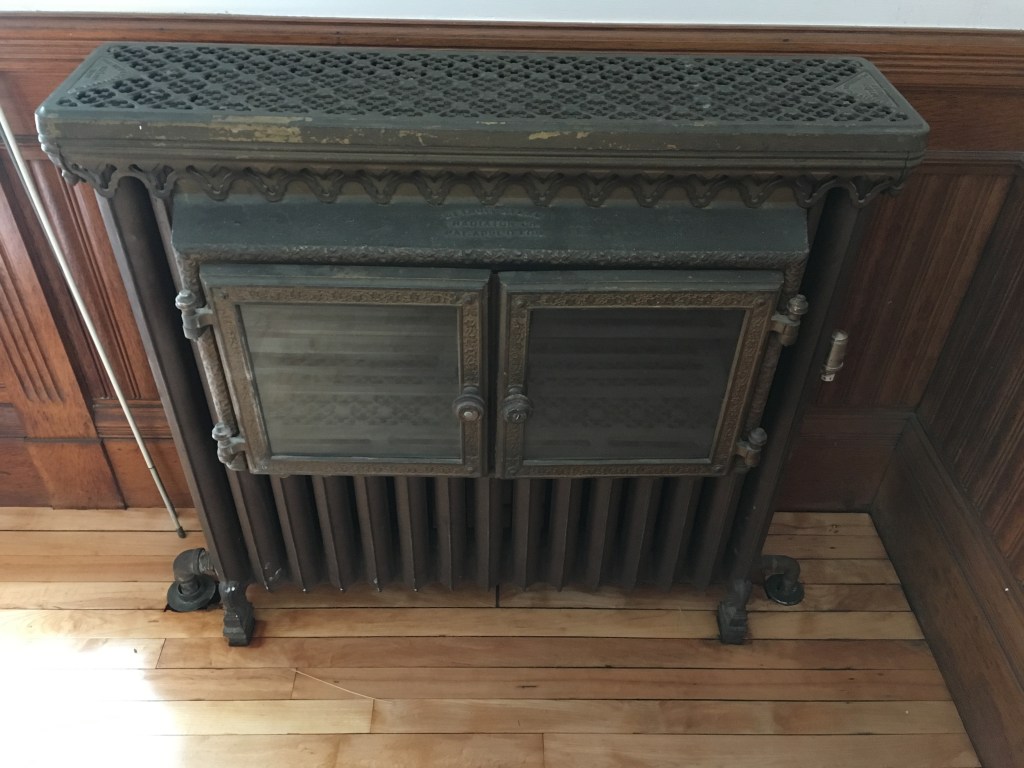
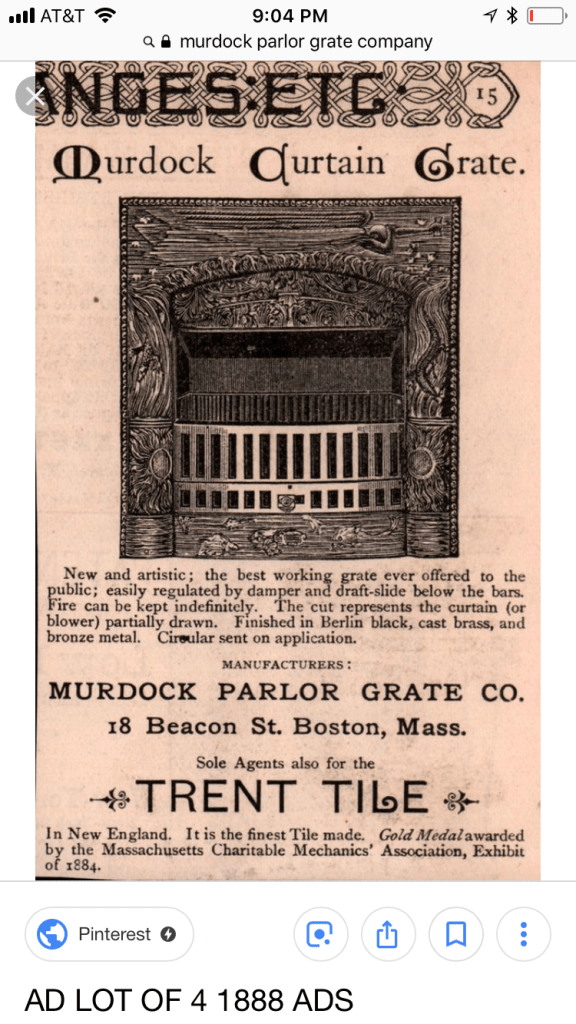
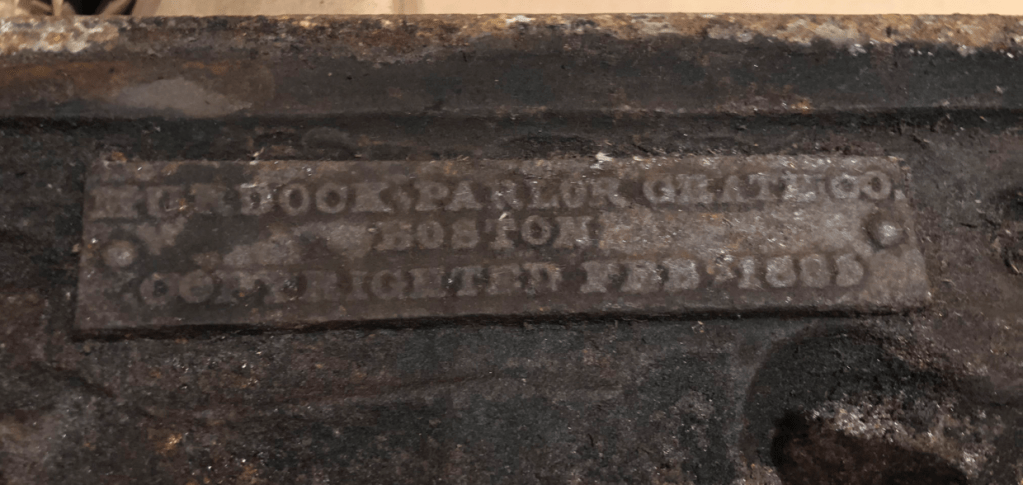
First like most restoration projects I began to research the Murdock and the Boston based manufacturer and I found a Boston builder publication from 1885 that advertised my very Murdock Curtain Grate. In addition, they listed it next to a Detroit Steam Radiator that is very rare for Dinning Rooms to act as a food or plate warmer. What are the chances that these two units are together in my house in back to back rooms? As I researched, I learned every issue of this Boston magazine had them both on the same page and I think the owner/team building my house was influenced by one of these issues.
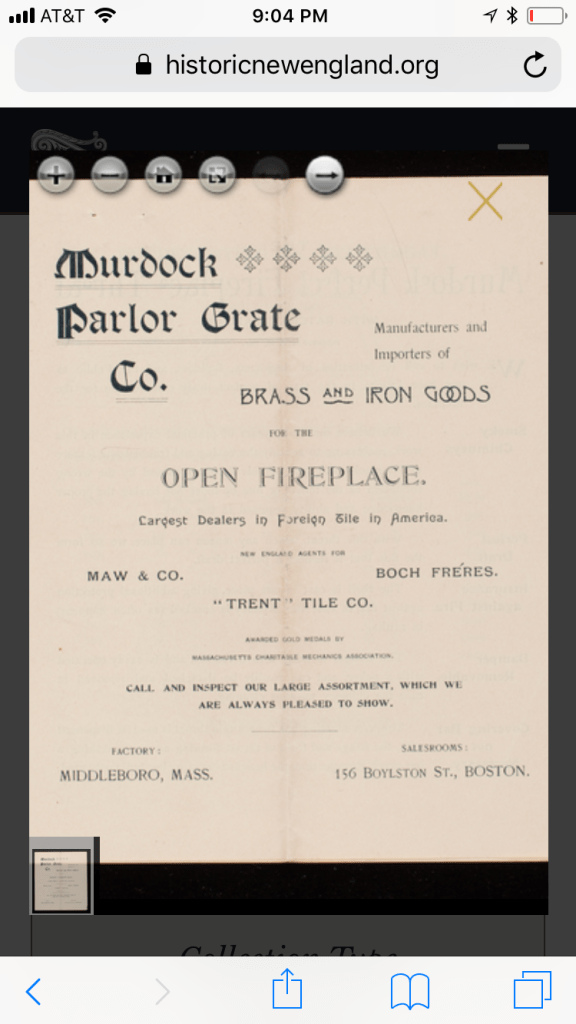
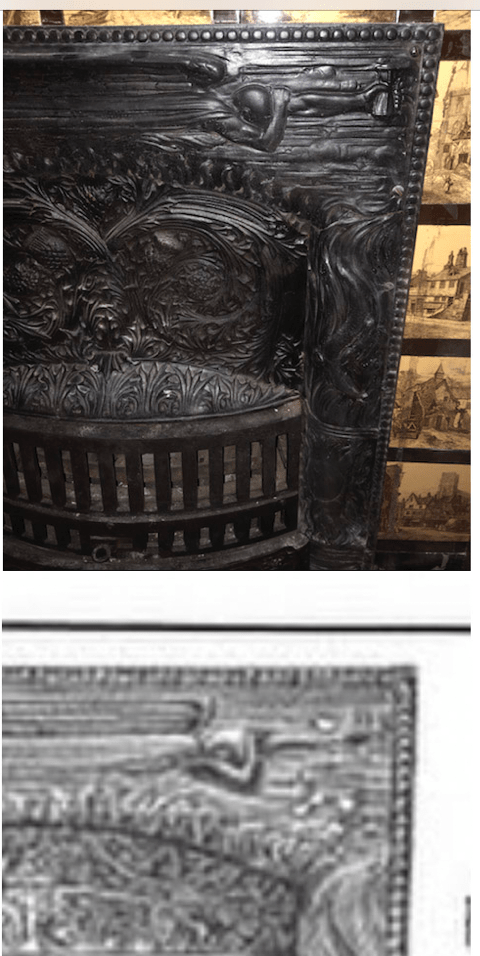
We started disassembly and I learned very quickly that it was built into the wall more than it was installed. A number of the tiles were loose and I taped them together to keep them from falling while I removed them. I soon learned that the tiles were Trent tiles as advertised for sale along with the grate in 1885. They are a scenes from abroad maybe France or Italy and I am sure to research them as some point.
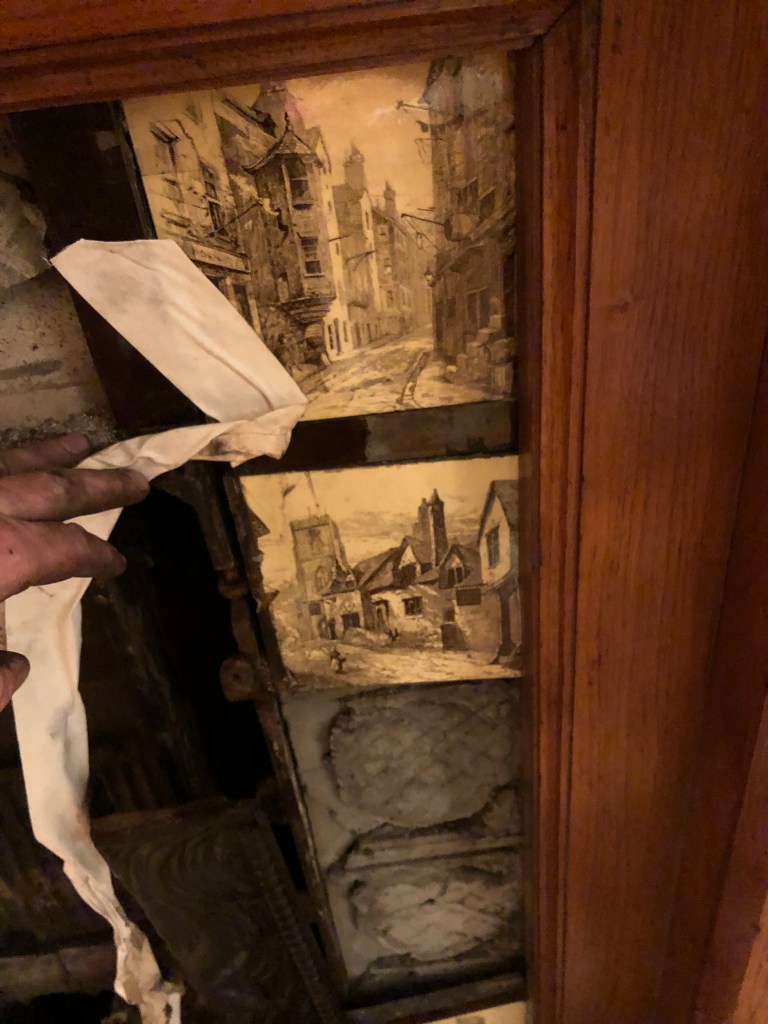
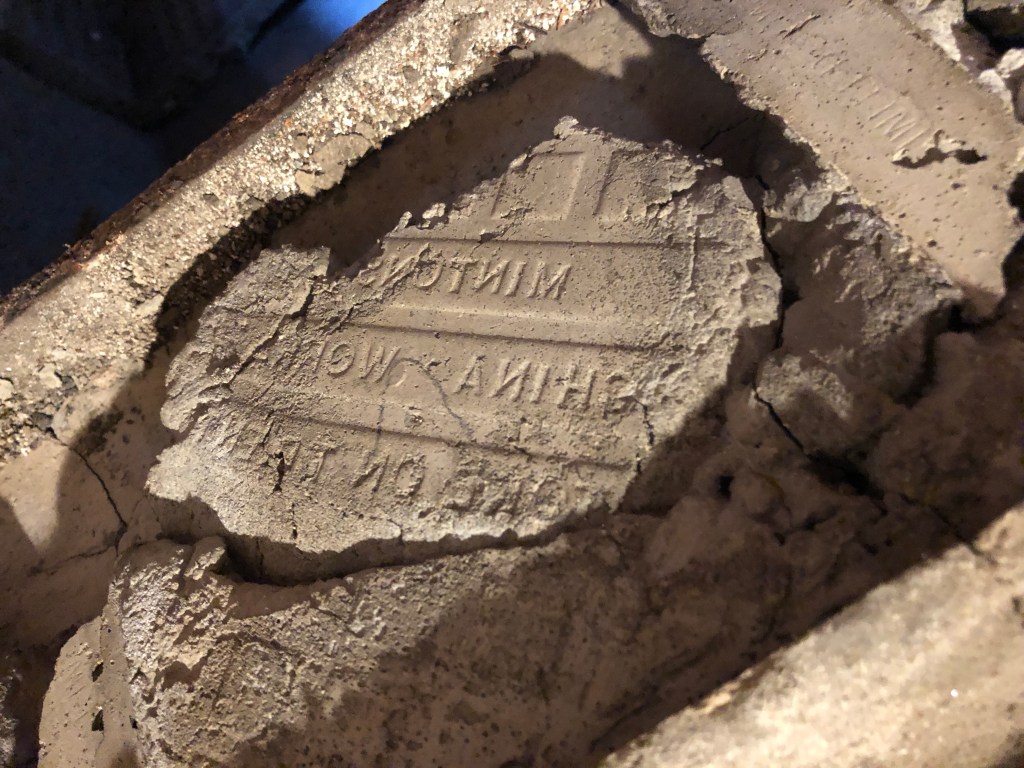
One by one I photographed their original locations and finished depth from the wall alignment to the curtain. It’s called a curtain because on the right and left had cavities where a chain and sash weight like an old window. They counter balanced a summer curtain that raises up and out of sight like a garage door. Pretty fancy tech for a Victorian fireplace. All of this was to burn coal which burned hotter, and less smoke so they were very shallow making the radiant heat closer to the room. The cast iron surround helped this process by transferring heat to room. Less of a draft was required do to the constricted opening and this resulted in less loss up the chimney and more into the room. It also made this fireplace draft with the small 7-inch liner which was a big concern. I was hooked and needed to see it working. Our ability to make it safe was still unknown.
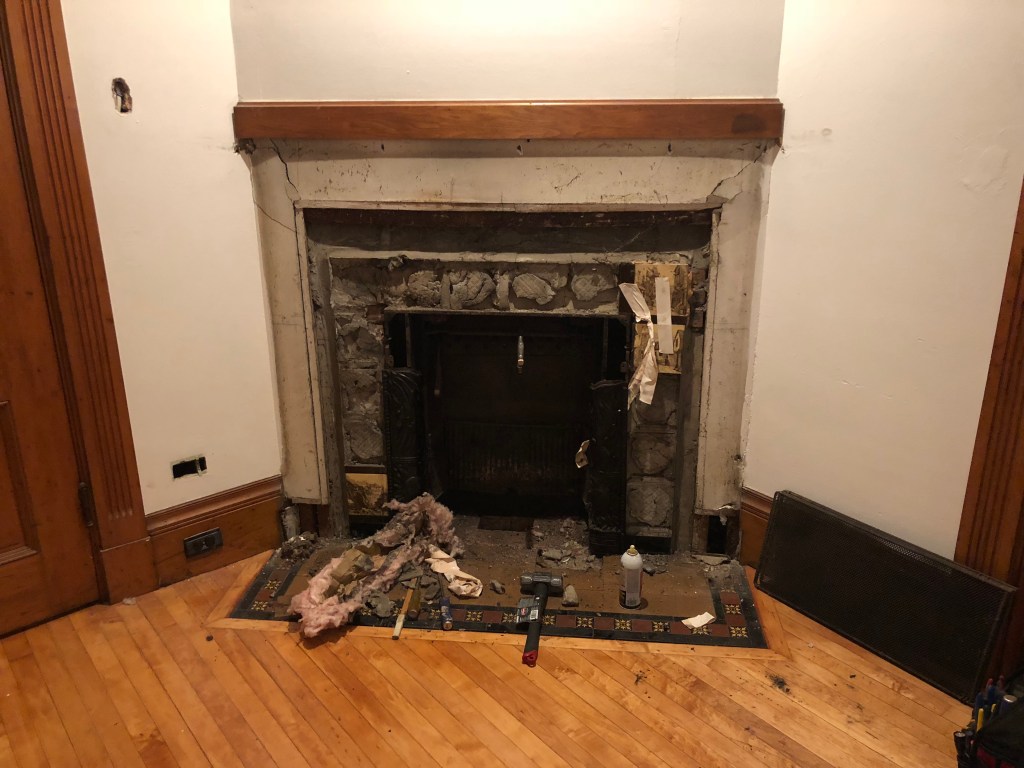
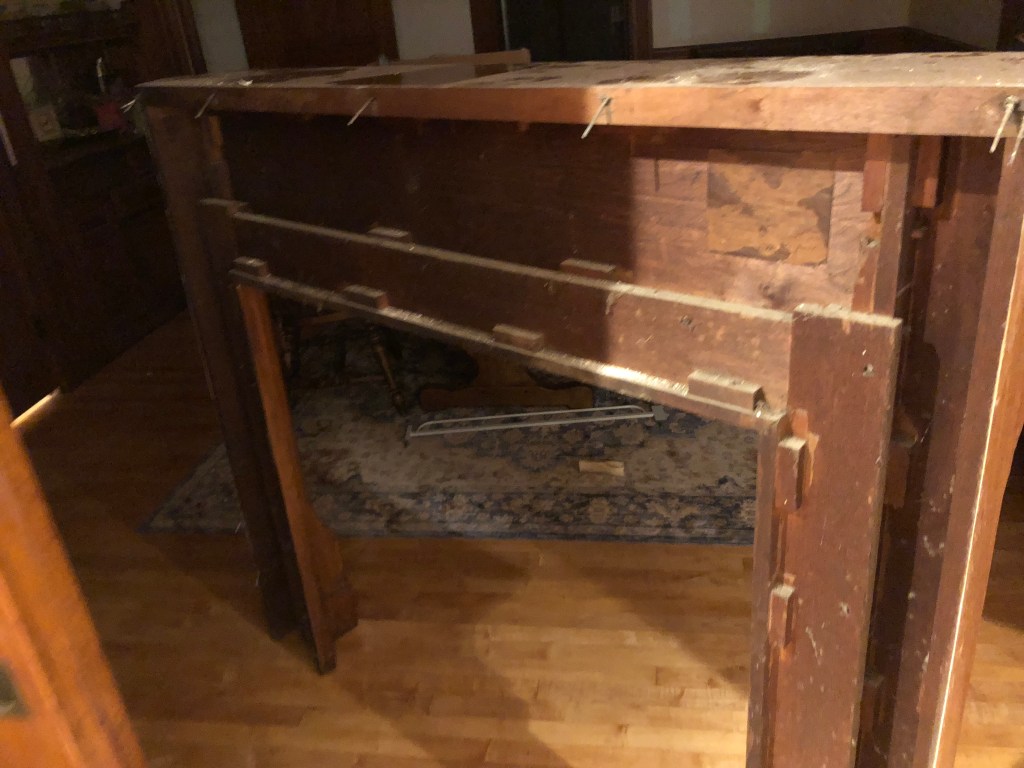
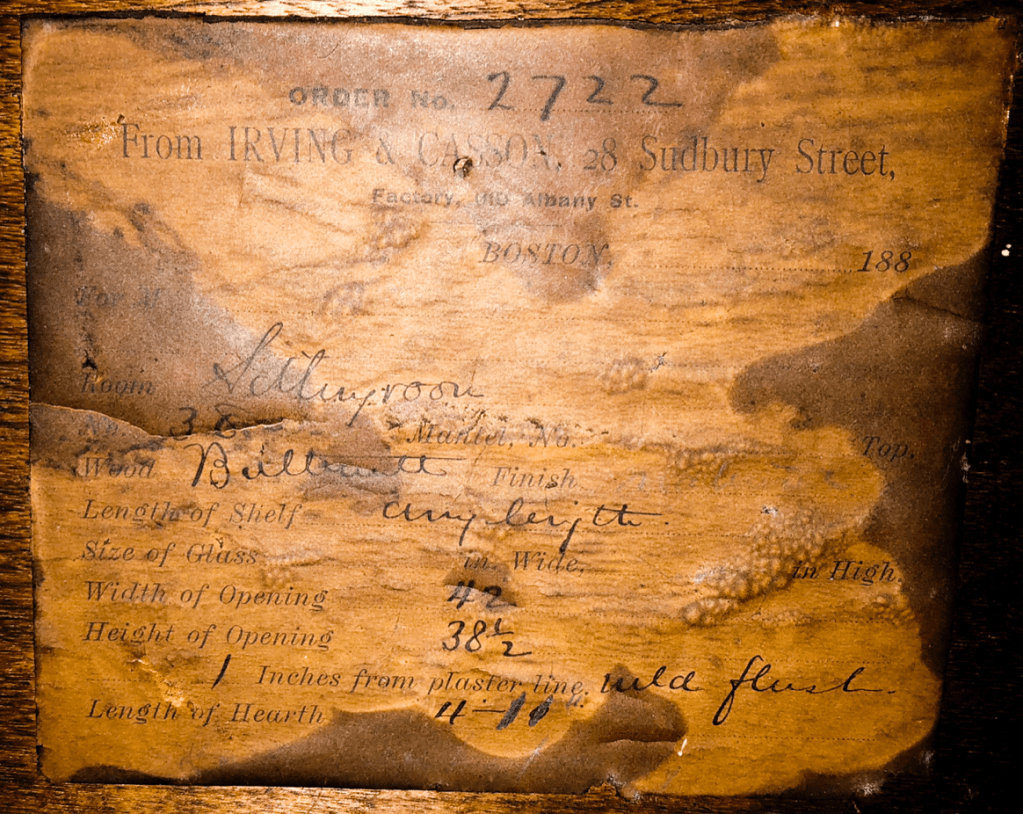
So with all of the tiles removed it was clear I was not going to gain access to the brick throat I needed to inspect. The mantel was removed and behind it was a card with the original order number from Irving and Casson Sudbury street for the Sitting Room. Kind of bummed they were too lazy to fill out the year… It would have been 1885. These mantles were ordered from a catalogue of designs and made in a factory to the rooms dimensions. I suspect they all were and it a cool glimpse into the Holbrook’s design sense back then. One of many times they still communicate through the house. Not as powerful as a message in a bottle but pretty cool find!
I kept grappling with the fact that I did not know how far this project was going to go. We would already have to fix the tiles and John was with me so brick repair was not a concern. It was clear that we were going into the wall. With a Mason that has built countless fireplaces this was a reasonable activity but it was a mess!!!
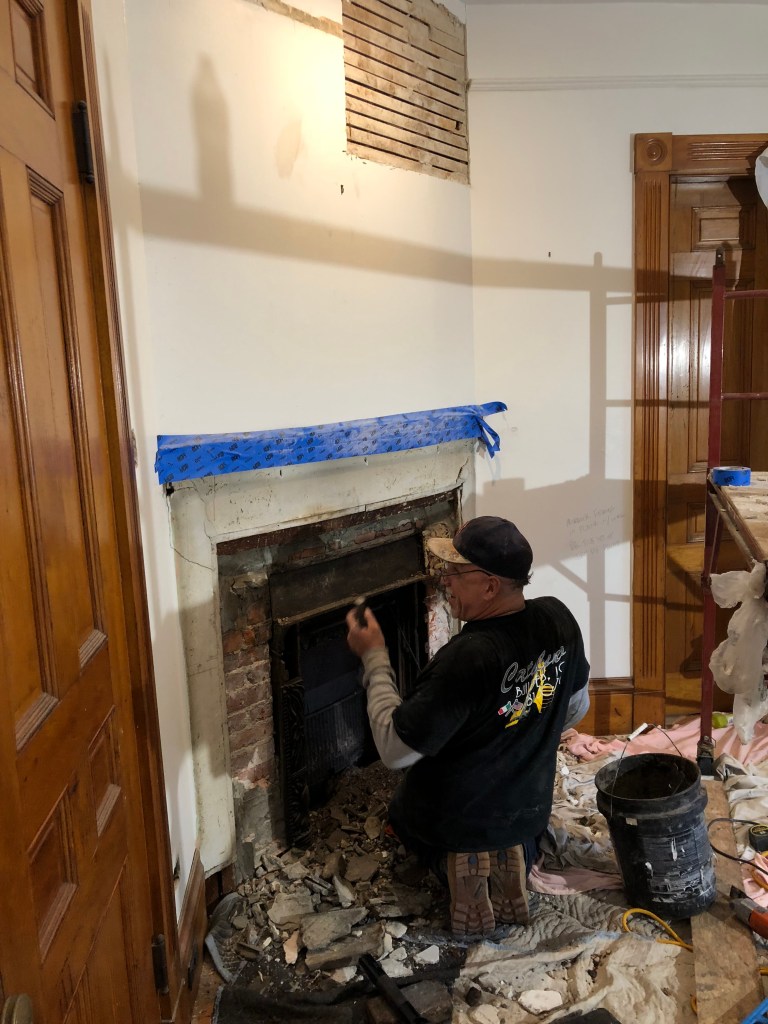
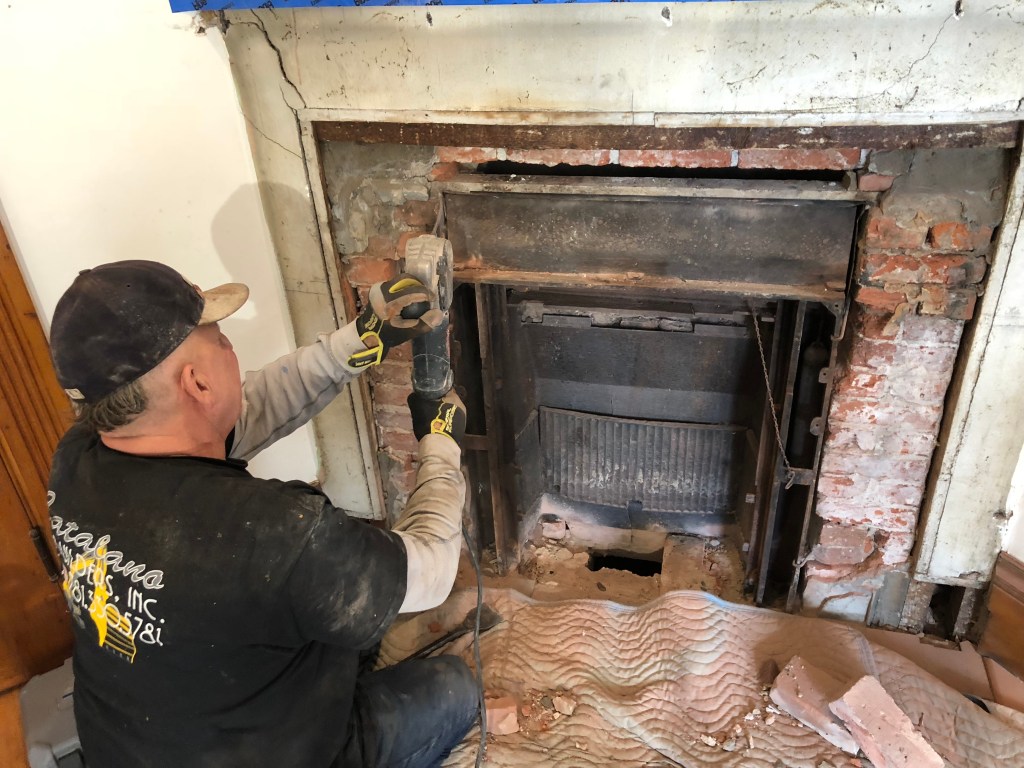
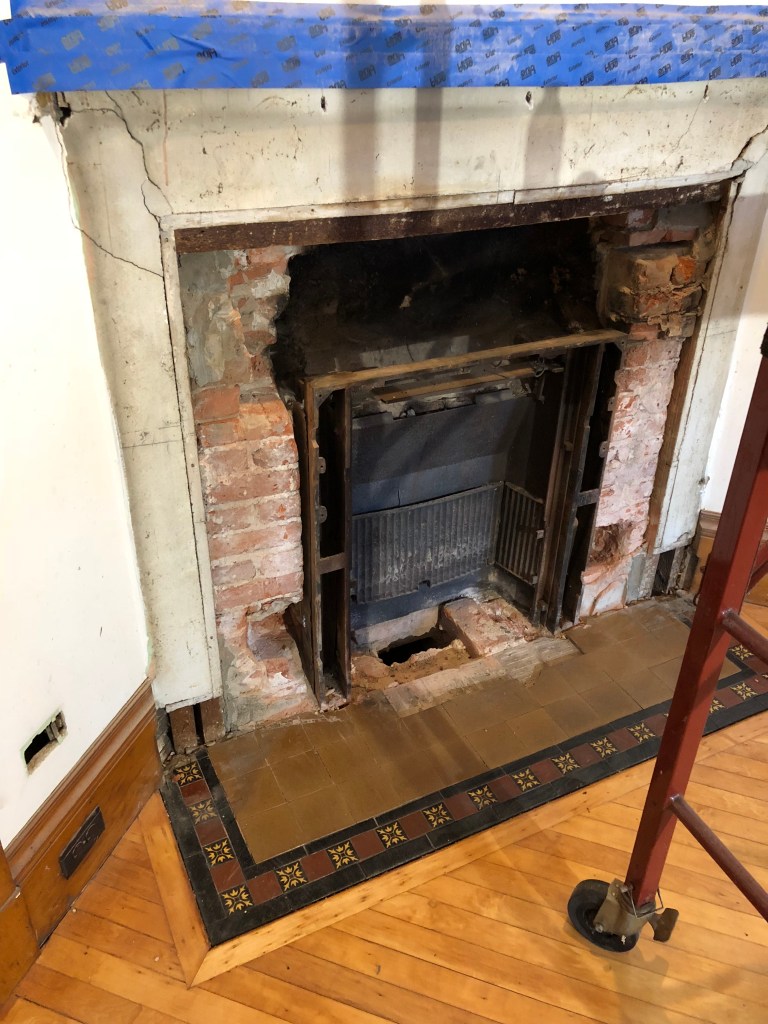
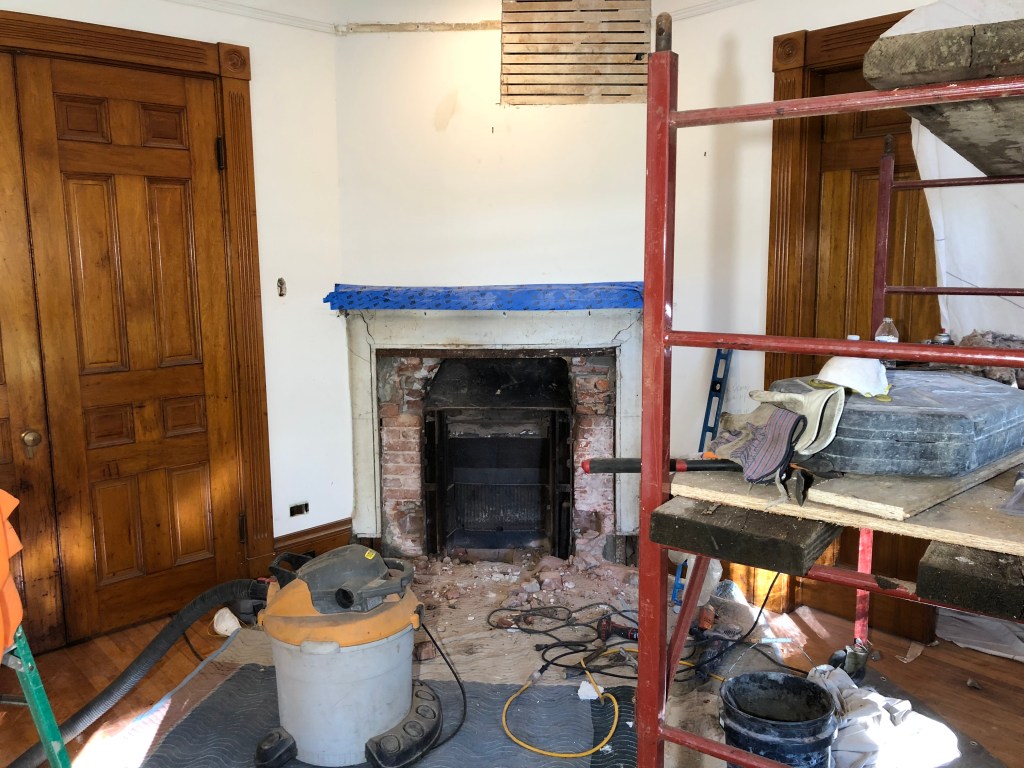
The truth is that the Murdock never left the wall. But we gained visibility to the throat. We could see where the liner was stuck and decided that we could not advance the liner or modify. There was a shaped rectangular pinch that was fashioned at the beginning of the second floor. The volume of the throat and the shape of the narrow rectangular opening must have been the subject of an onsite expert advising the mason or very specific plan dimensions. The throat was also a specific volume and shape. The masonry was very much a part of the end design for this grate to burn effectively. This entire 4 flue massive chimney was then built around this piece of Iron Grate made in Middleboro, MA! Hence the odd twists we found in the other flues.
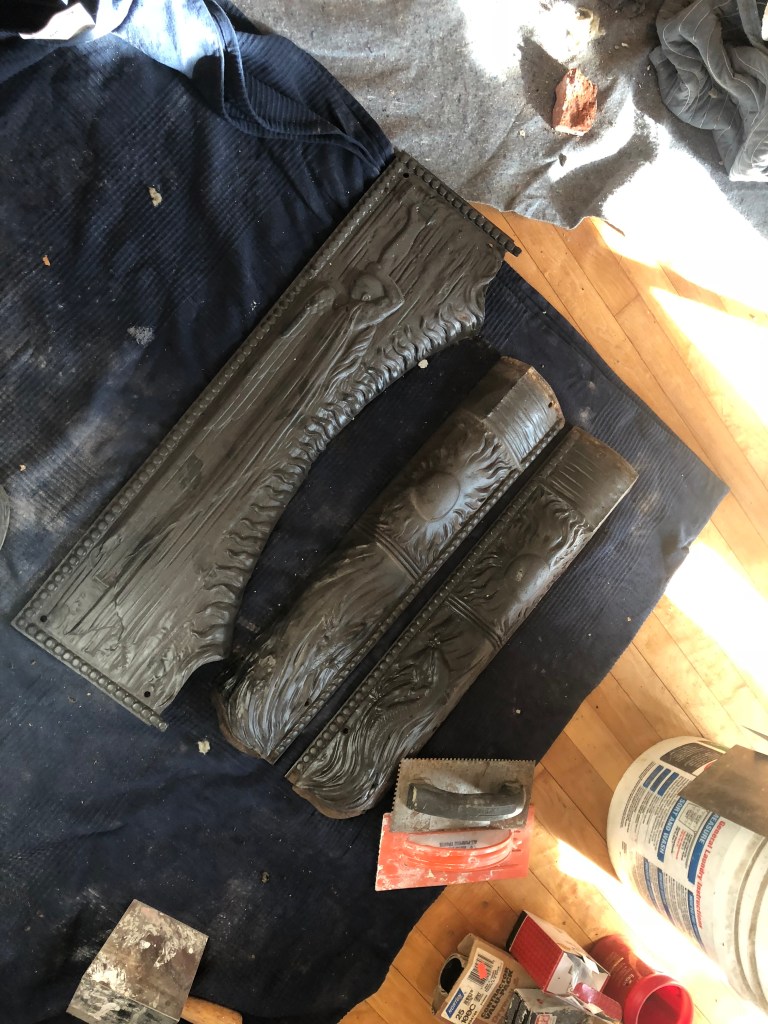
So Johnny sent the boys from Needham Masonry over to help me with the specialized restoration. I had secured the liner packed it with ROXUL from the second floor through the wall to assure the gases would transition from brick into liner. We inspected and parged the interior of the throat above the grate so that it would not leak into the house. This ads a thin coating of mortar to seal the brick and was the main reason we needed access. But everything needed to be re-installed, the weights, new chains, mechanicals and that process would take a few days and a few layers of mortar and cure times.
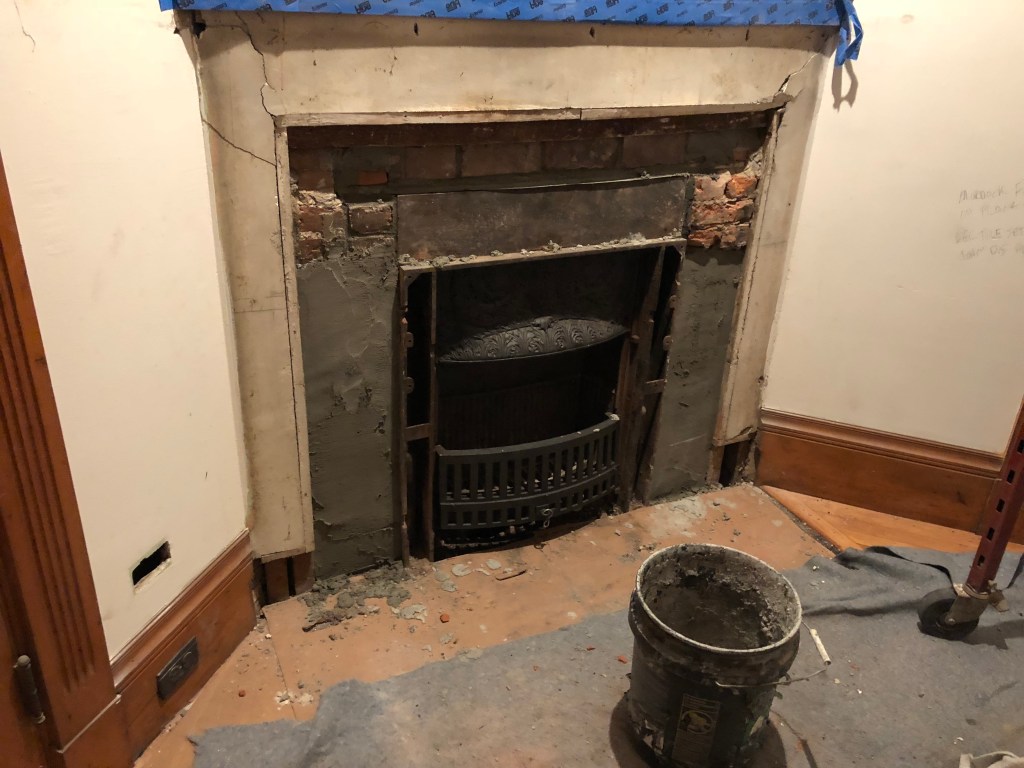
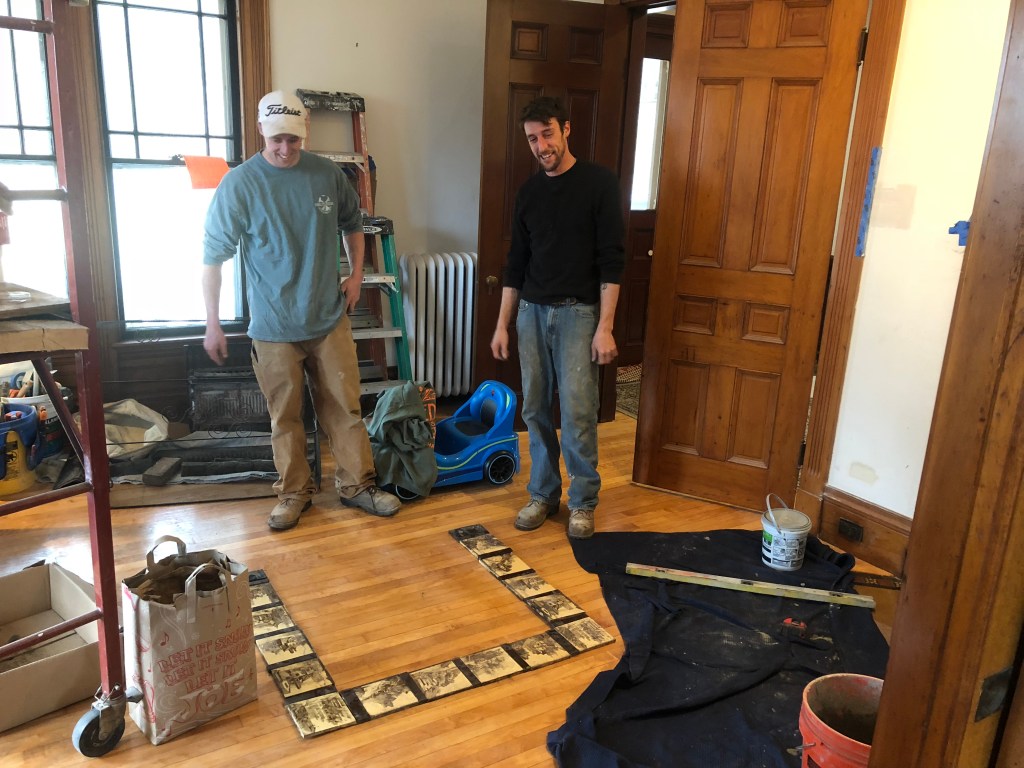
Once the things were dry and new brick repairs in place, we stared to layout the tiles on the floor and got ready to put them back on the wall. We also had a number of floor tiles to replace and modify. The room was far less dusty today.
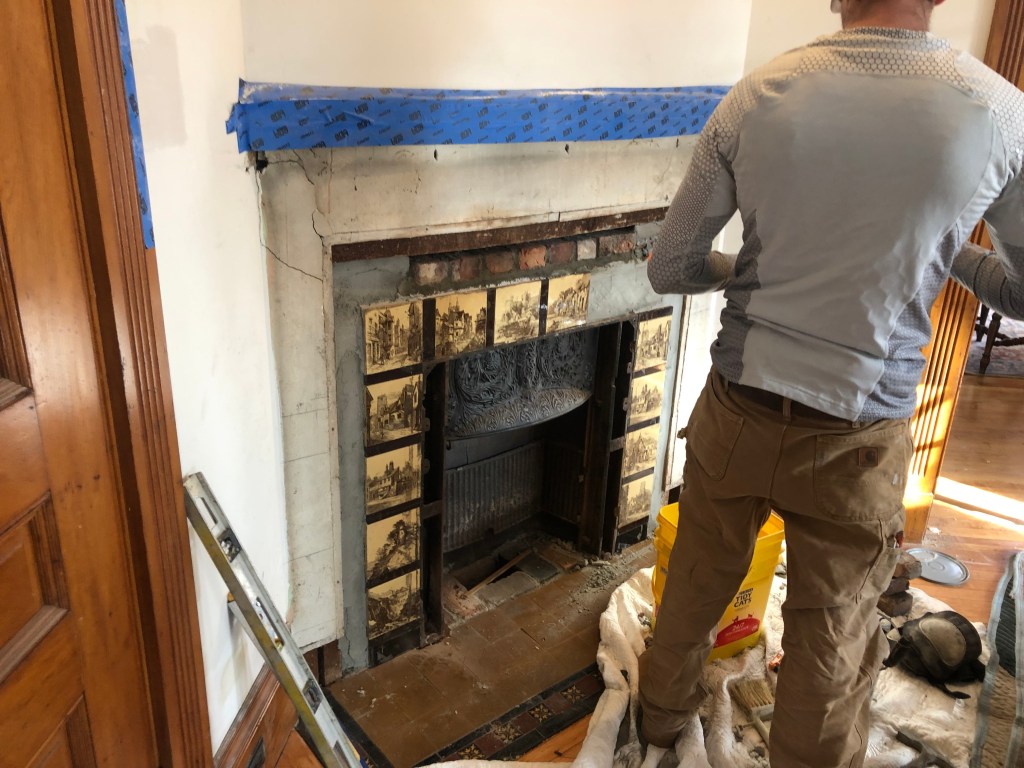
It was not long before the mantel was replaced and you almost could never tell any of this effort took place.
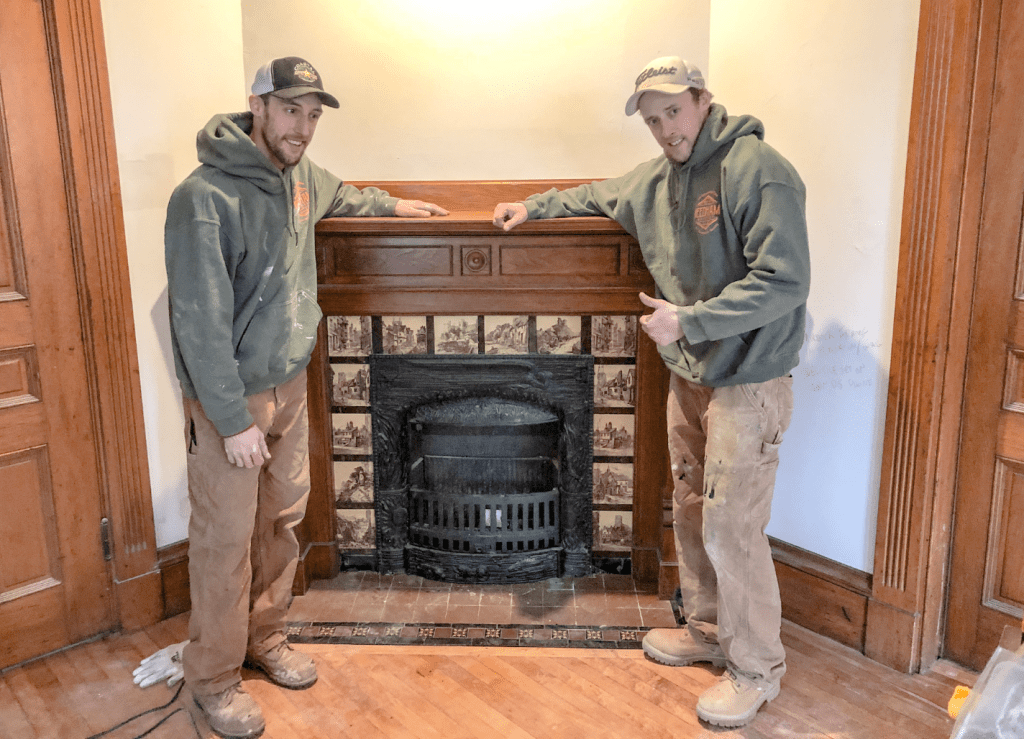
The only difference is when I show off the sitting room and someone asks, “pretty fireplace, does it work?” I can say, “yes it does and its safe!” Then I had to wait an entire month to let things set up 100% to avoid cracks and damage from heat. But soon the day came and I thought it would never come.
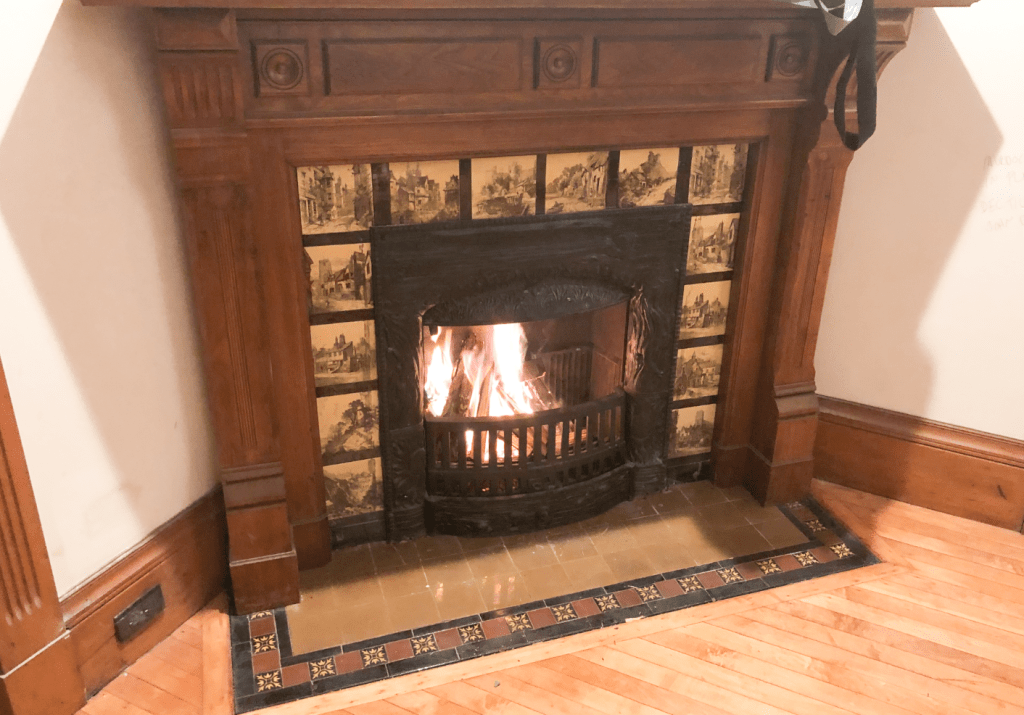
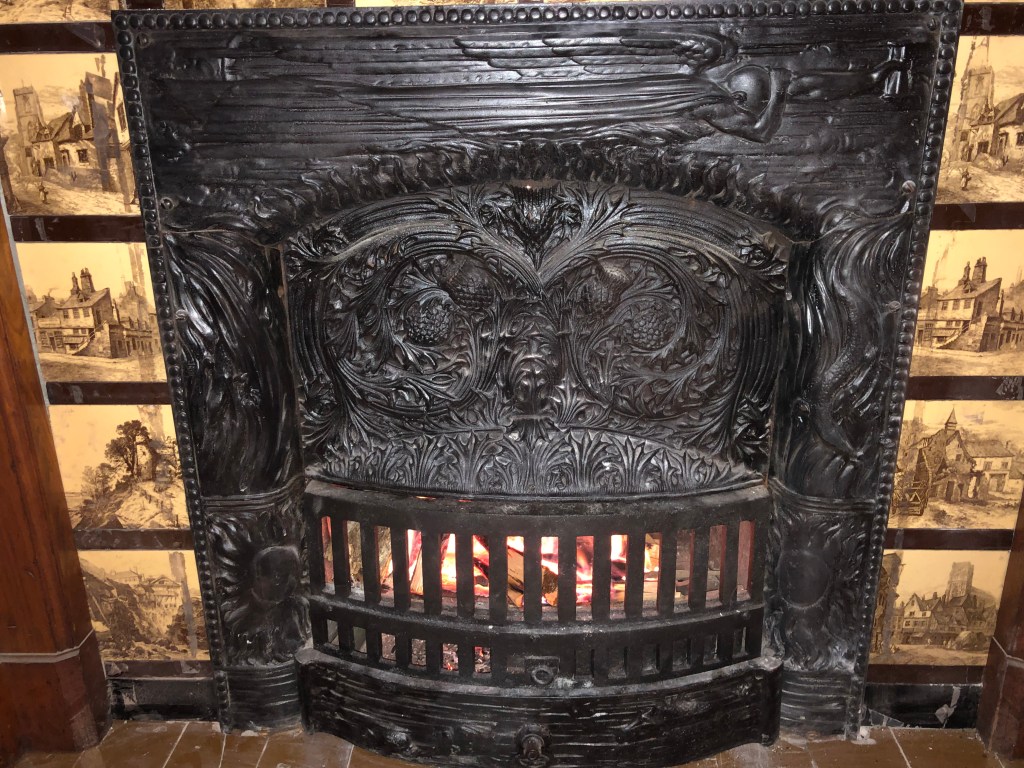
In my early conversations with Johnny Catalano he said “sure we can fix it, we can do anything. It’s just going to take a lot of time and effort and will be a labor of love.” He was sure right but every time I look at it I hear our joking and laughs as we tore out the wall. We were crazy in some sense. At each point we got stuck or broke a blade we would scream, “Its’ a Murdock!” as it plagued us with more challenges. So Johnny C one more time “It’s a Murdock!” and I will remember this every time I look at it! We did it!


 The Holbrook House
Leave a comment