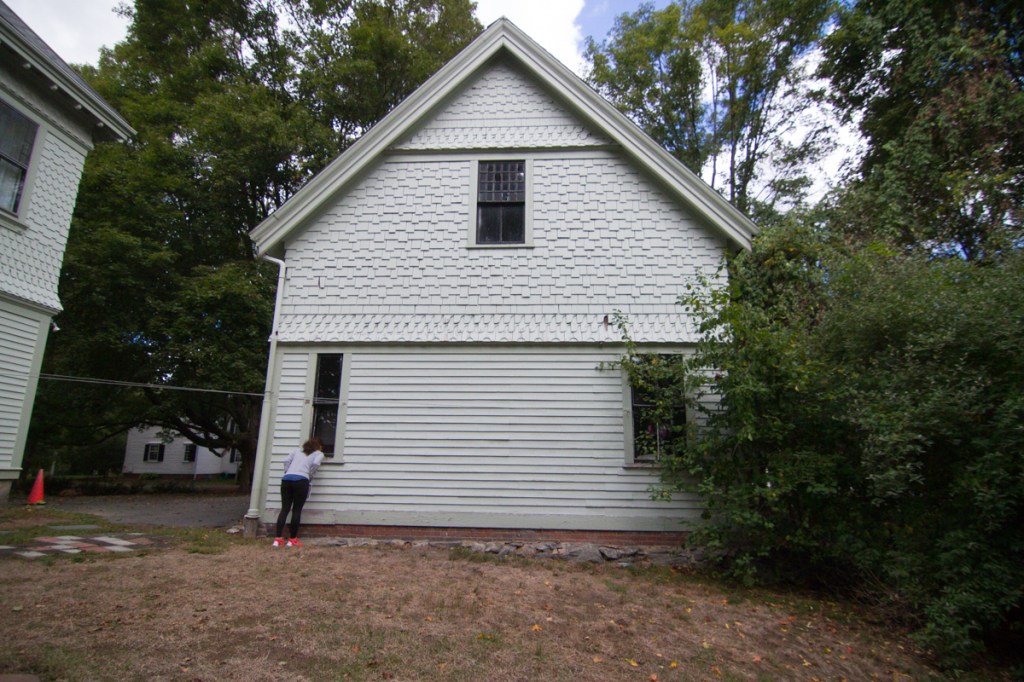
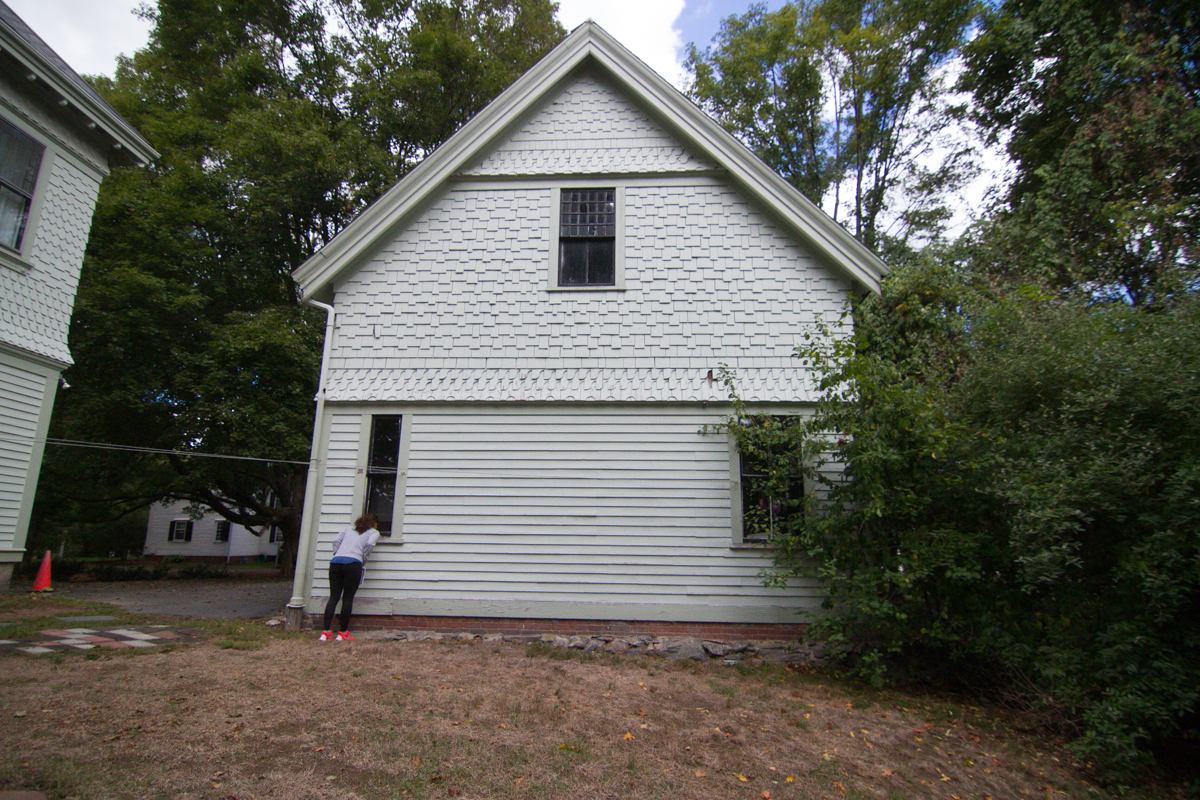
So I am going to start by saying a barn on and old property is a great statement but maintaining one is very much like owning another house.
My (not Gorette’s) dream criteria for buying a house was 1880-1910 Victorian. It was not always the plan though more a dream. I have always had a thing for this time period. I love Victorian homes always have, always will and I get very interested in their features, history, and how they were originally lived in and I am a total geek about it. When I travel I actually ask where they are, I go look, take photographs and its like bird watching. The best ones are architected and they can be very ornate and their high ceilings make a very grand statement compared to their colonial counterparts. I follow many old house websites and my favorite are listing sites that catalog old houses and their real estate photos when they go up for sale. Everyday I get to walk a few virtually and after years still am amazed to see the level of craftsmanship and originality in these homes and I believe unless you have $3M house budget the best homes in the country are grand victorians and are already built.
So how does this relate to the Carriage House. Many Victorians are downtown on main roads. They were show pieces and meant to be seen. 4k+ sqft is not at all a mansion by todays standards or even close to some estates in my town today. But, in 1885 when Jonathan Holbrook built my house it was and its asymmetrical shape and ornate embellishments were a statement of wealth and opulence.
Most of these houses are in city areas (not where we choose to live) so to find one in a rural town thats has the signature of an architect and build quality is not always easy. There are a few in every town and you can’t expect people to be selling when you want to buy. Then add set back from the road, large lot, and a carriage house your really in very special privileged set of owners that are more custodians of these beauties then they are owners. To others its just a relic of an old house that looks like a money pit and they snark at the idiot who would not want a new home in a new neighborhood (sounds like my Gorette anytime I talk about more projects).
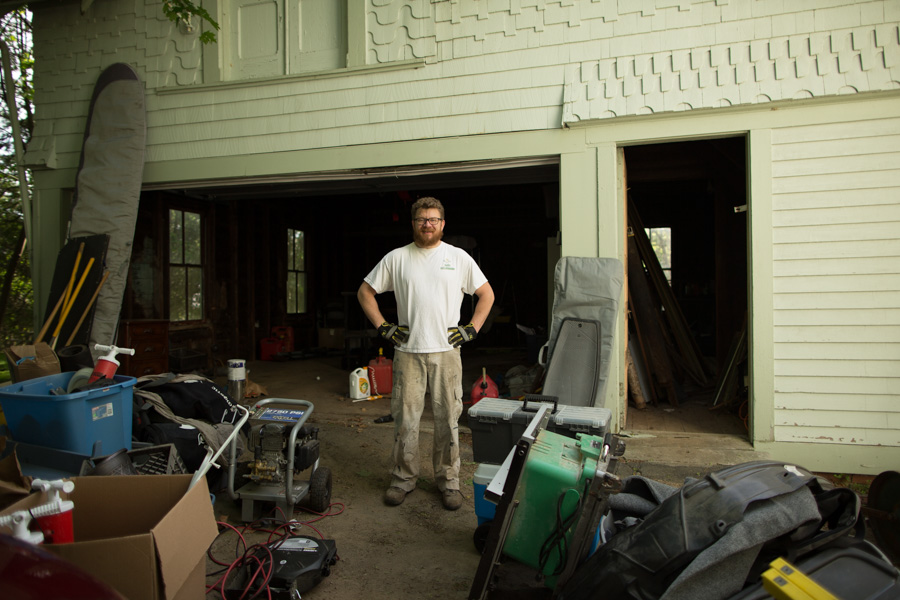
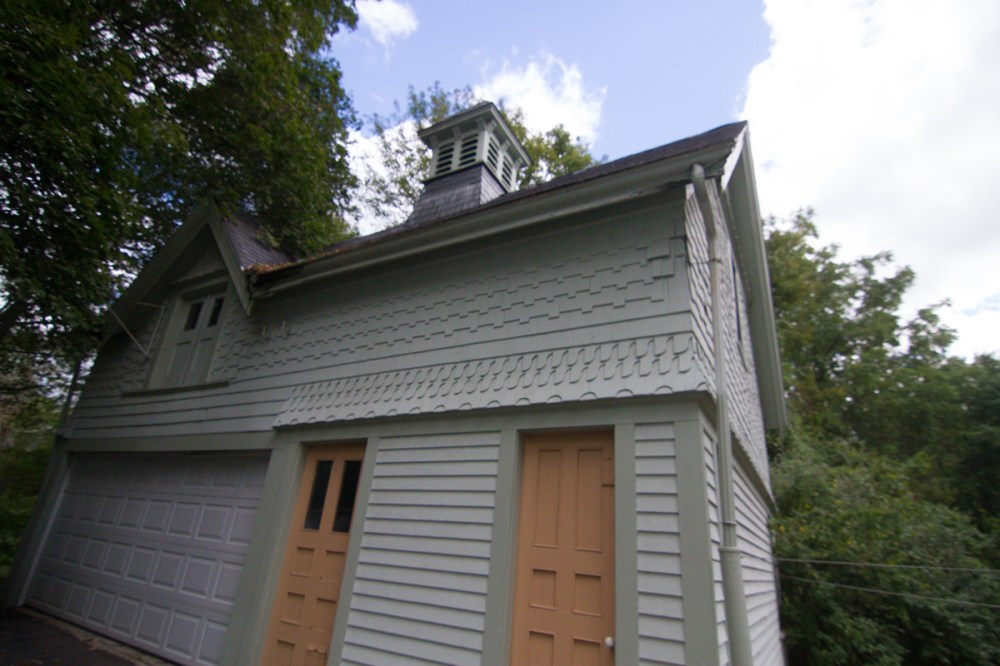
Well I am that idoit. The carriage house was very much an amazing find to go with a victorian as many are gone. The build quality varied and like mine once they are no longer maintained they degrade quickly. So many carriage houses are gone today long since collapsed to avoid the expense. Some of these larger homes with carrige houses of better quality have luckily survived. As cities subdivide some great examples are lost to make room for additional housing. In Boston, the big ones are now actually converted to homes with their own address. Clearly top coaches and horses are not so popular these days. Mine still had a double horse stall and 3 seat outhouse all sill intact.
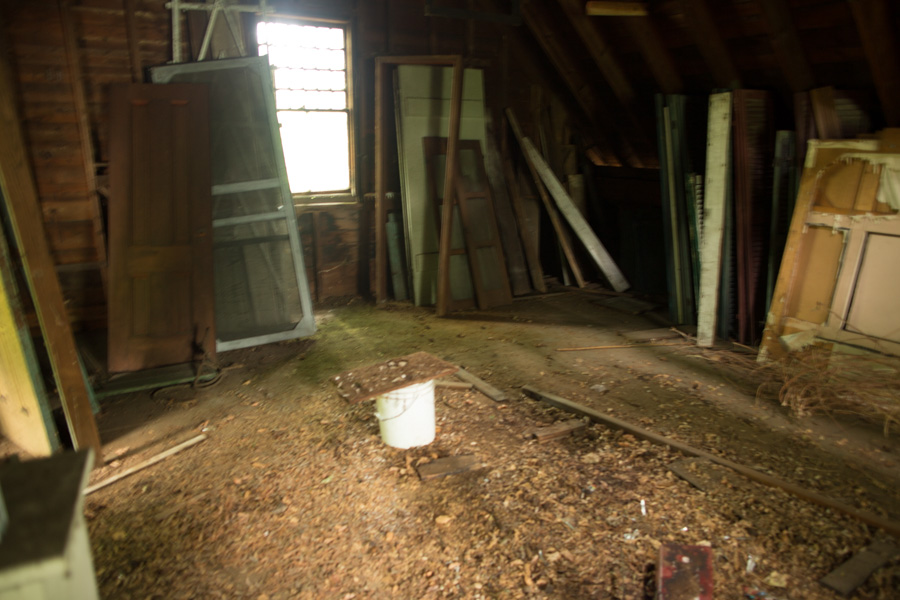
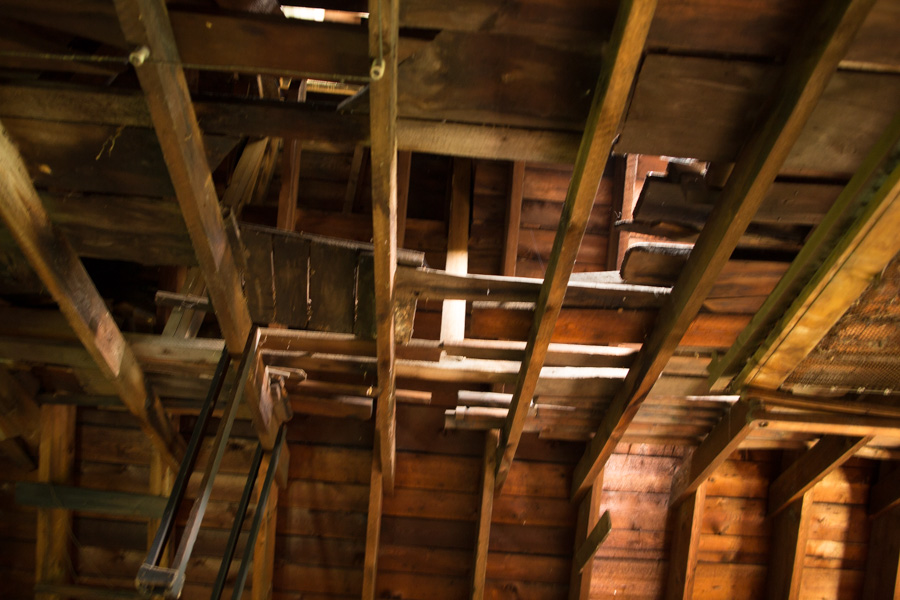
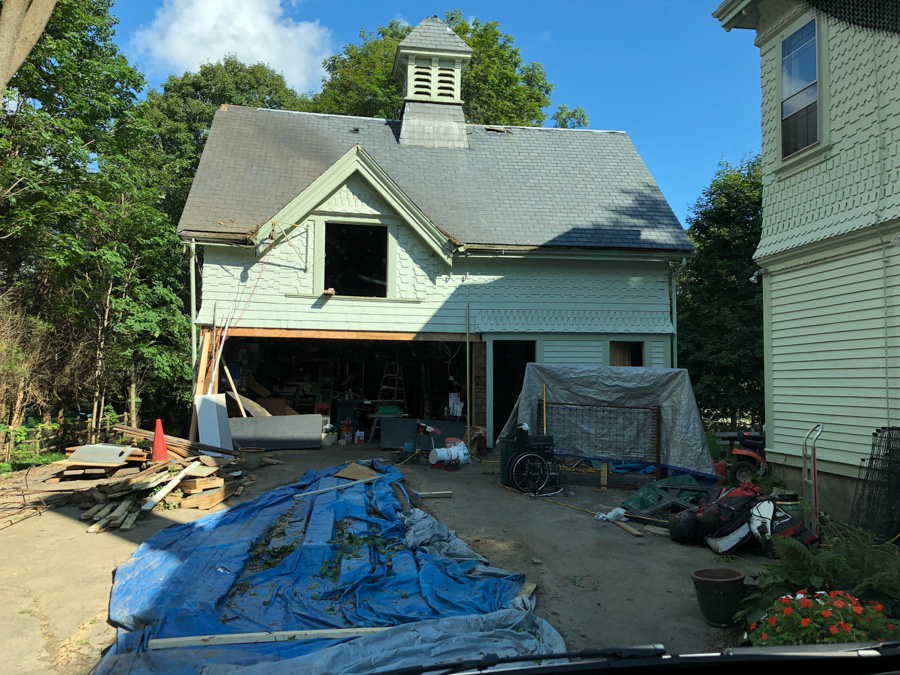
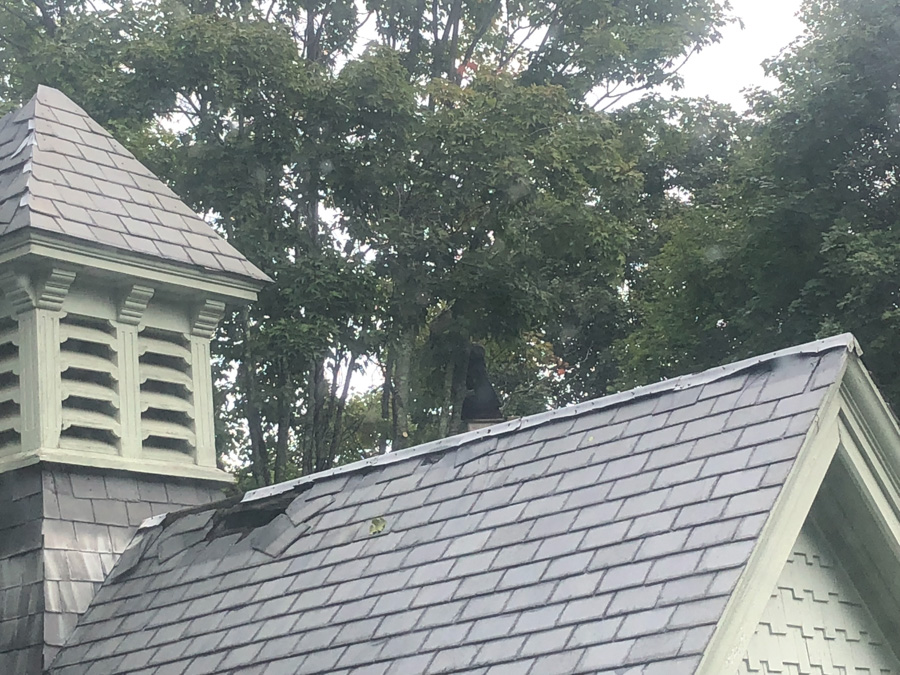
So now that I set the stage for the wonder of having a barn and make it sound all wonderful and lucky, let me share what it means to own one. The barn is a money pit and I did not expect to spend most of our kitchen renovation on keeping water out of it or making sure its continues to stand. In my head it was a future project and it became a priority when I realized the water damage was significant and needed to stop. Plus what moron bought a barn with a slate roof? No wonder no-one just repaired those holes as you need a lift just to get to them (you don’t just walk slate).
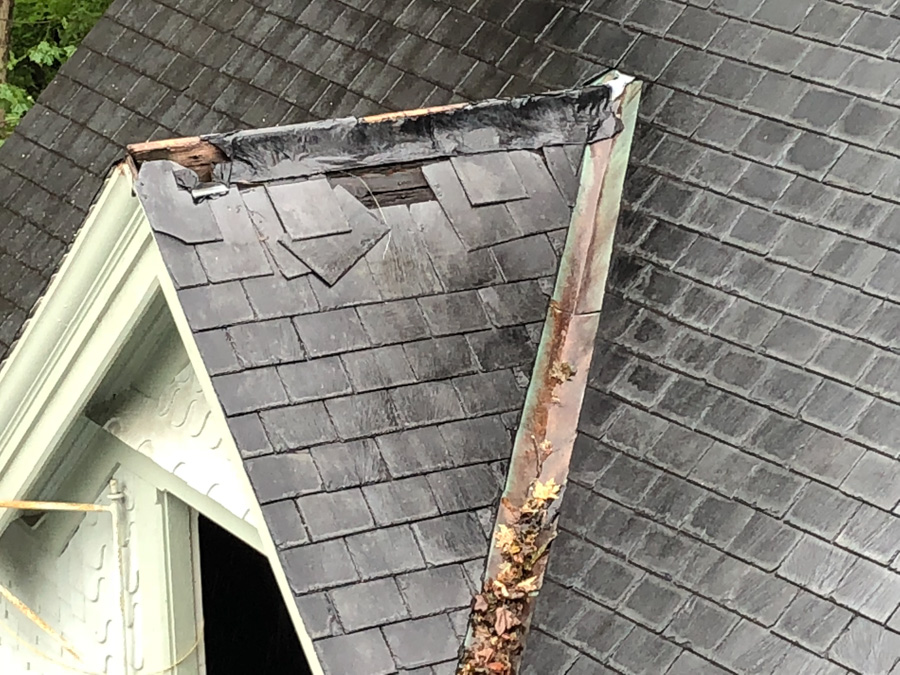
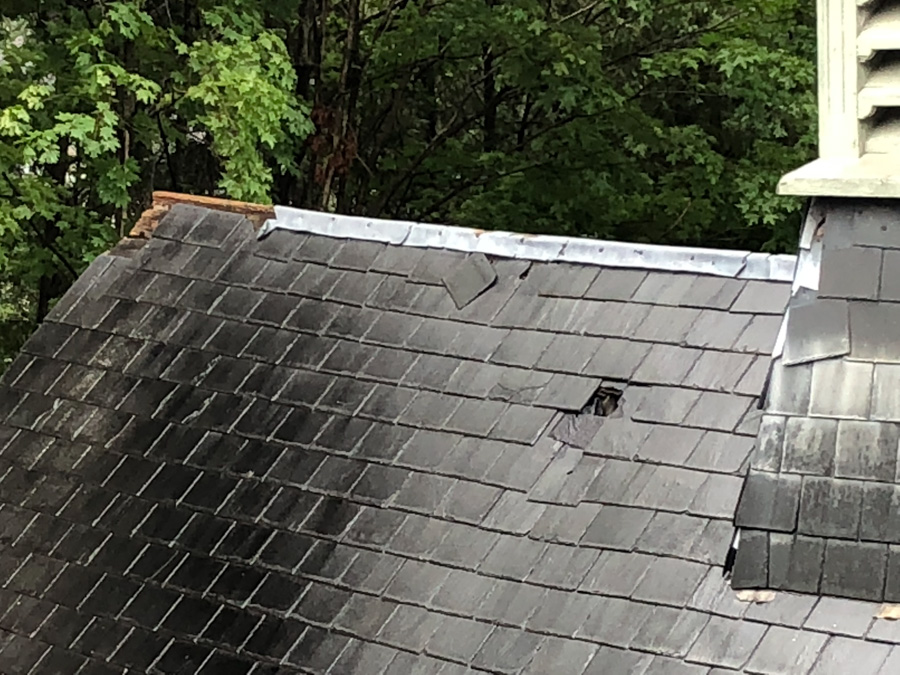
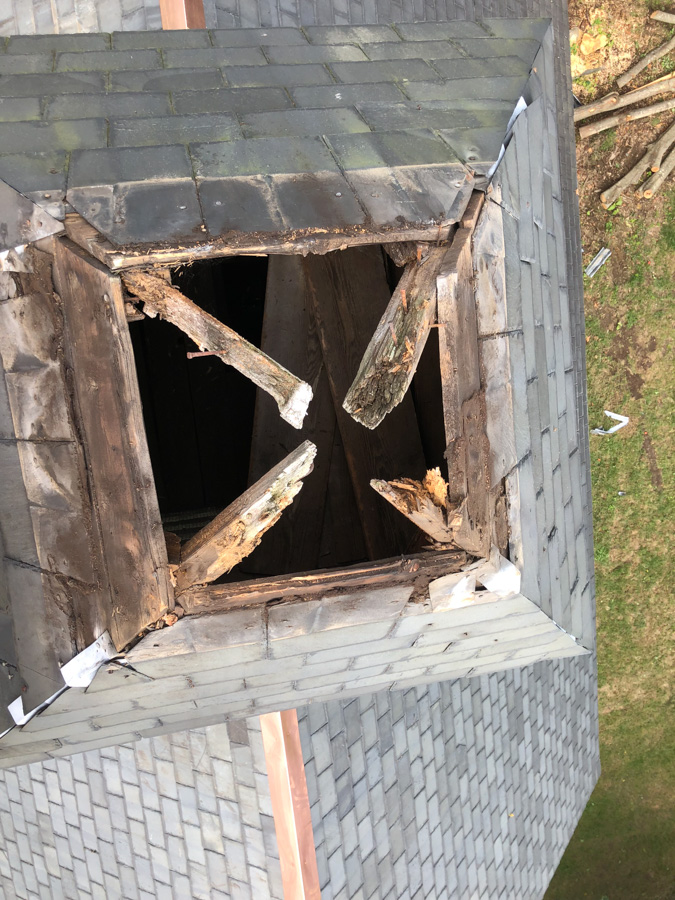
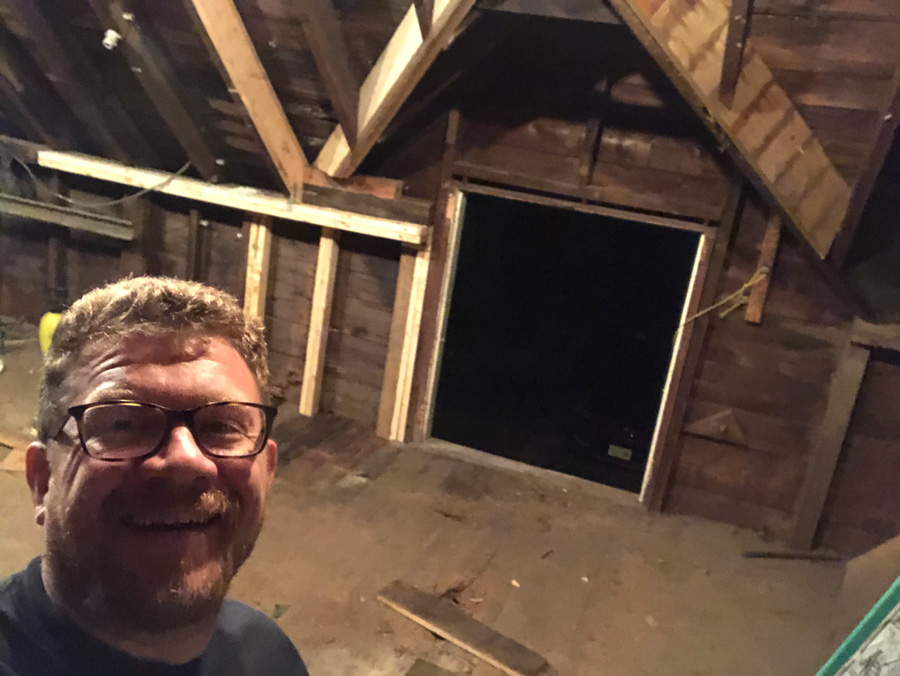
So the first step was to fix the structure and John Catalano was up for the task thank god for that! Can’t thank you enough Johnny C! So we were sitting by the fire one night yet again on the Cape and I was saying that I wish I could just make my barn problems disappear and thats just what he helped me to do. So we ordered some materials and boxes of Timberlocks of all sizes. We stared to jack up the roof in the barn when it became immediately apparent that under our feet the modern beam spanning the garage door was rotted all the way through. No way around it the project got bigger.
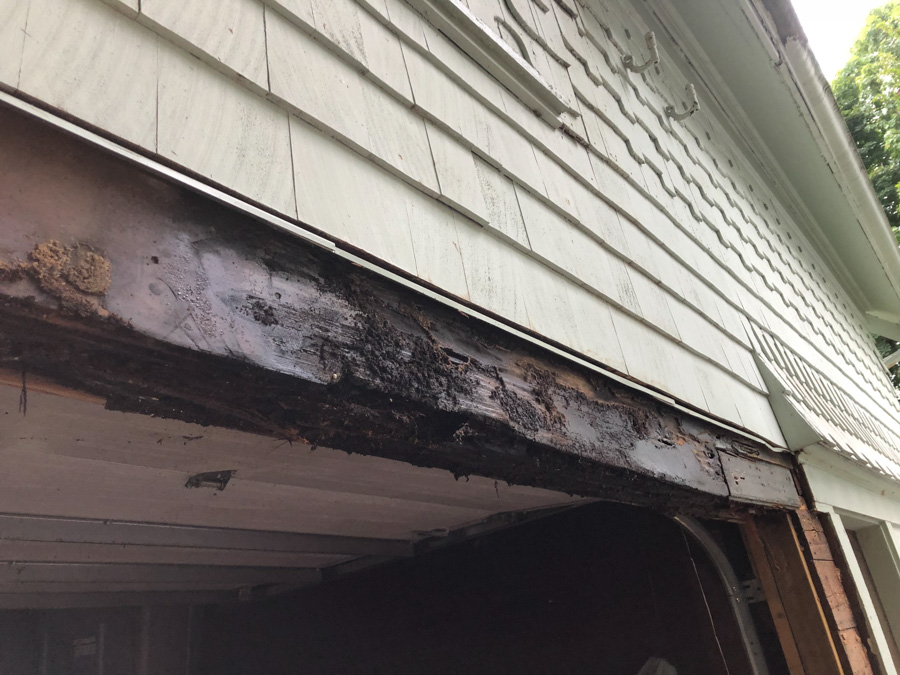
So we started in on cutting it out and removing the carpenter ant nest.
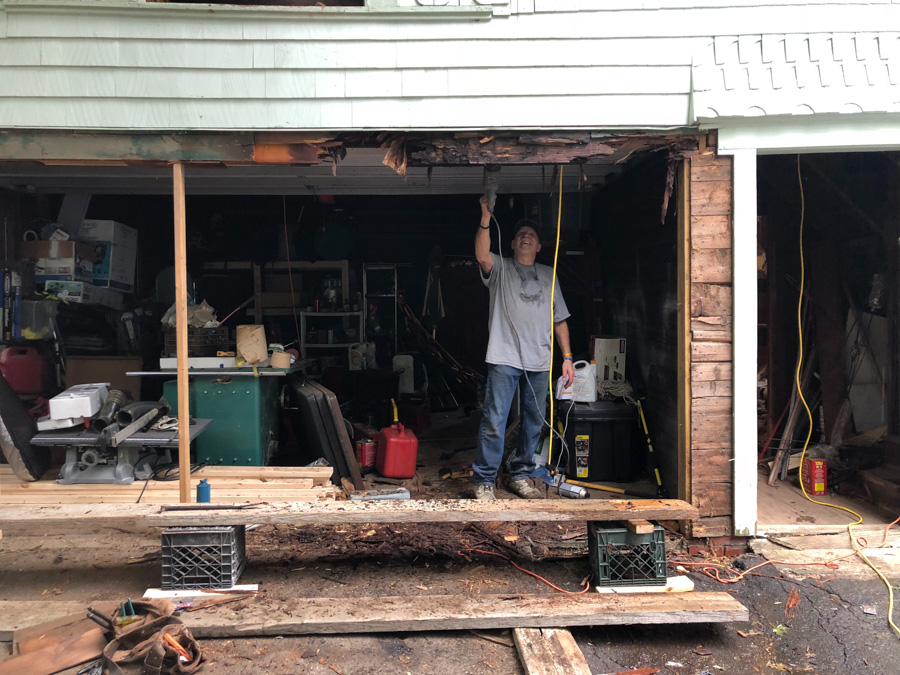
And a day or two later we had a new beam and could restart our jacking of the roof.
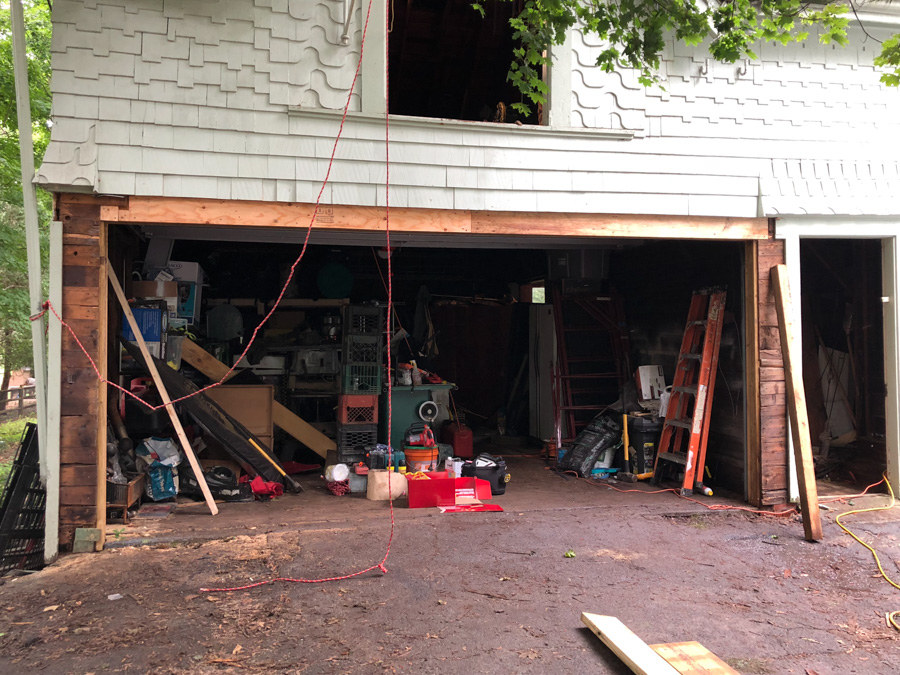
Out went the rotted support beams.
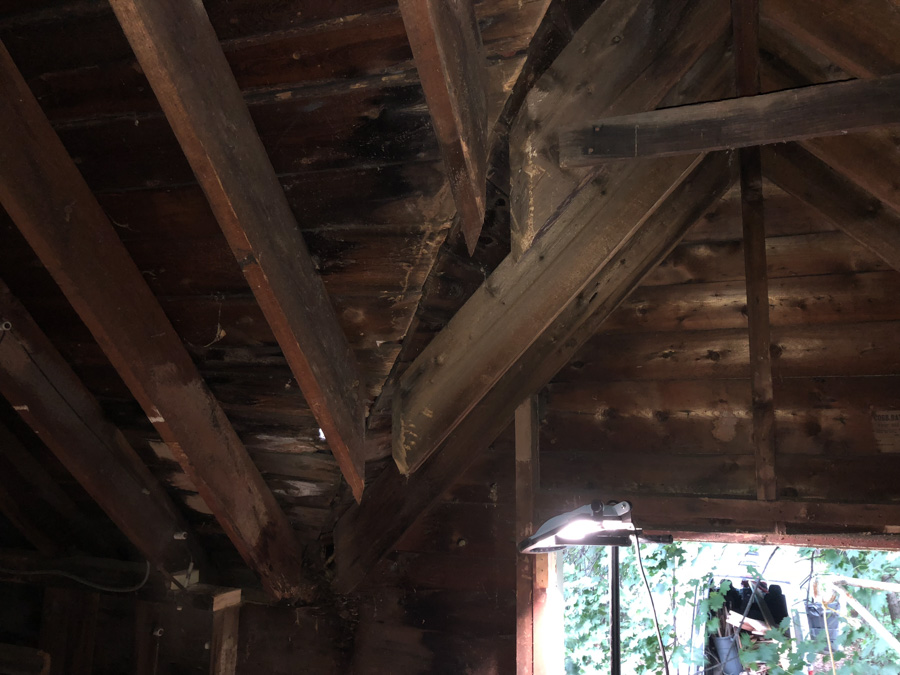
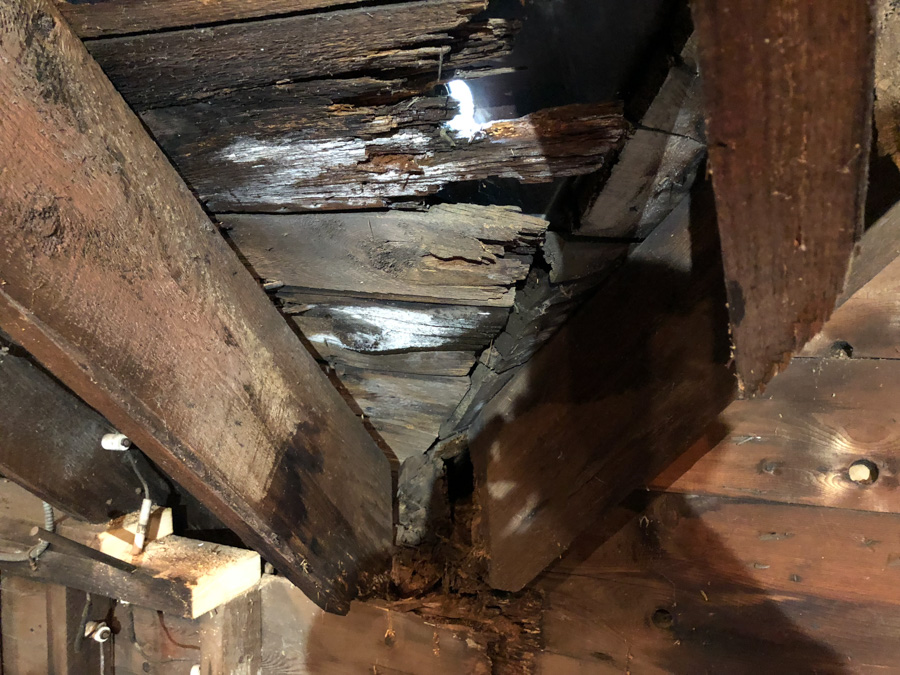
Fast forward a lot of sweat, swearing, and one or two really loud “You motha f_____a’s” later the barn was structurally sound. The clock was ticking as it was still leaking like a sieve! Now that there was something holding the roof and you could nail to it then it was time for the exterior slate work to begin.
Johnny C sent over John Curtis the slate master (this is a dying trade) and his lift and they got to work peeling off slates, replacing rotted sheathing, and added back the missing slates all from the same quarry in Monson Maine just 140 years removed.
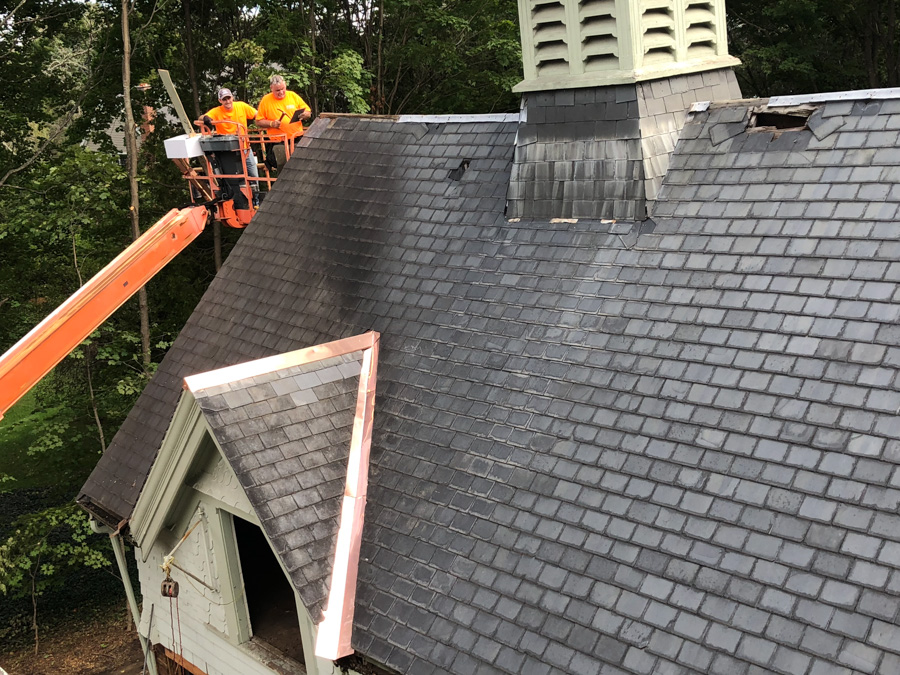
We also did all the copper work cause thats cheap…. Right?!?!
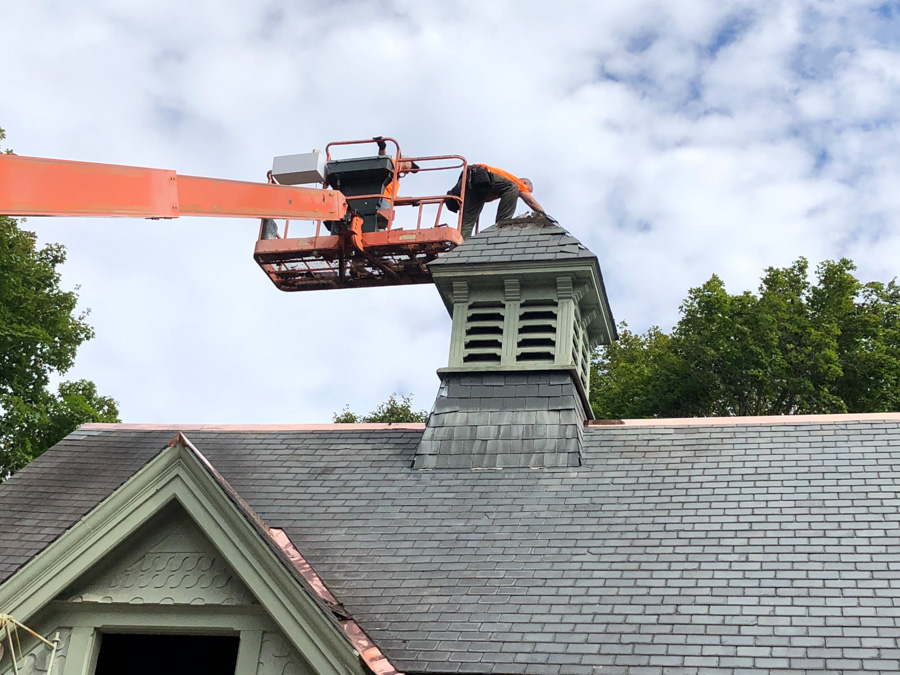
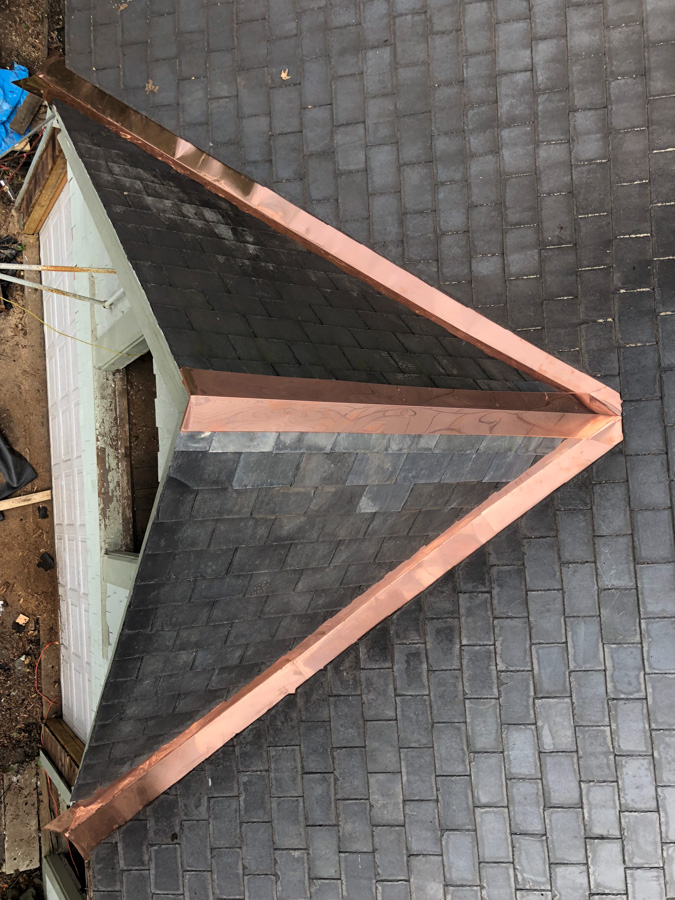
John Curtis was a pleasure to work with and did a really nice job!
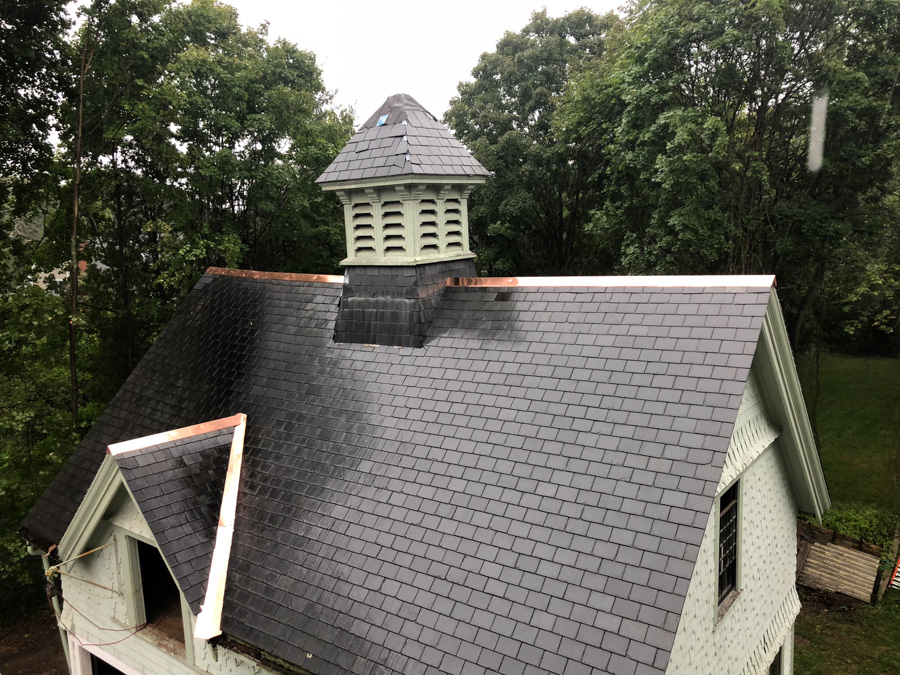
While we had an 80 foot lift on the property to work on the chimneys we fixed the cupola hole and added a weather vane.
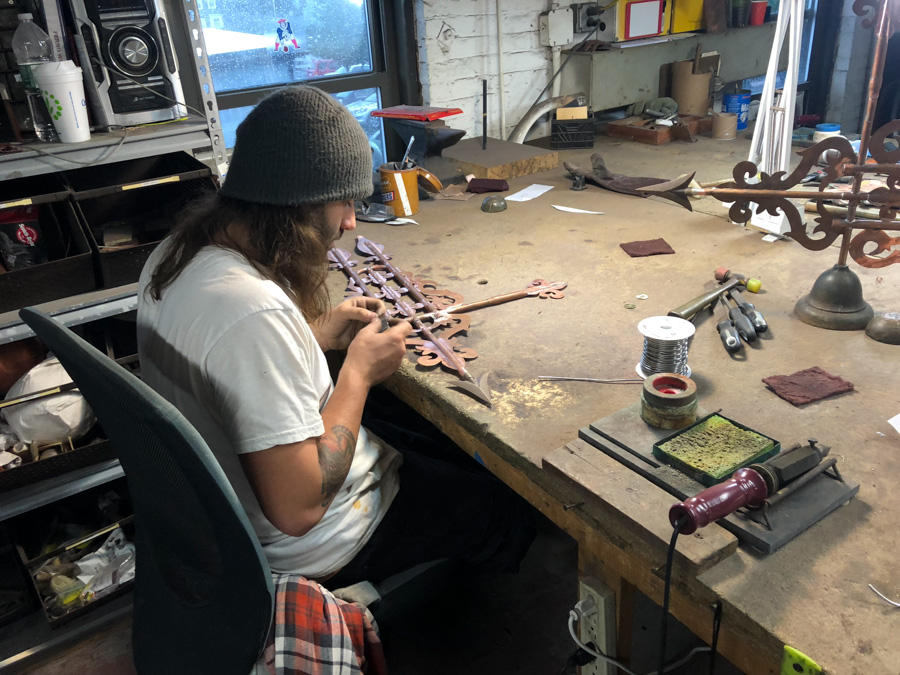
I looked online and was disappointed at the stamped versions online so I found Ferro Weathervanes in RI and spoke to Dave Ferro about making me a custom victorian period scroll style vane in Bronze. We reviewed pictures of my house and barn and I took some measurements. I drove to his workshop and got a tour and it was really great experience to take ownership of one of his vanes made for my house.
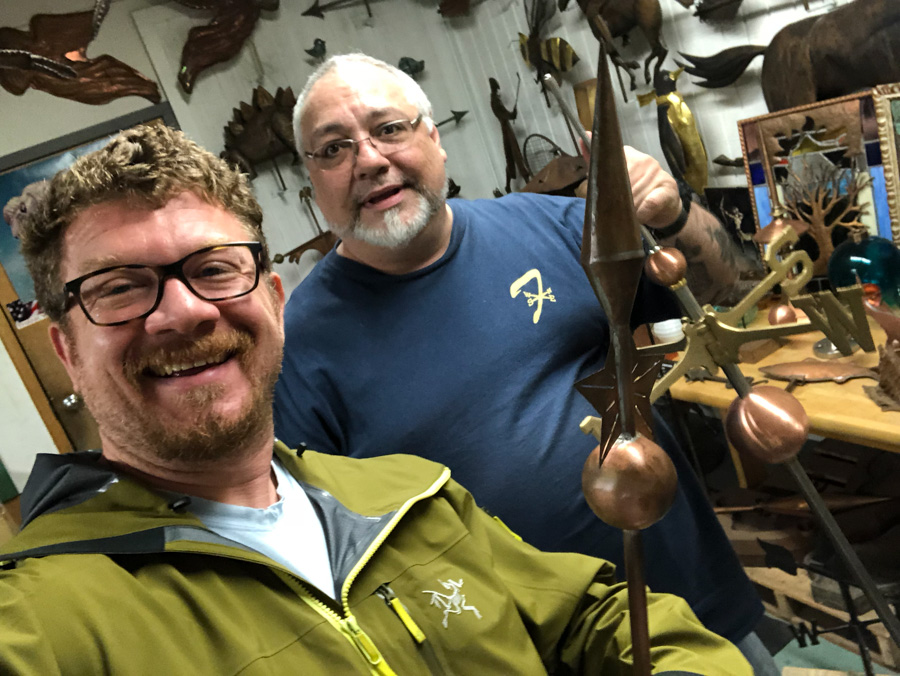
Antique folk vanes have really high value and while I am not a collector nor have that kind of budget it was nice to compromise and purchase a new vane from very skilled hands. A Ferro artisan vane was really a great touch for the barn. They look way bigger in person than on the barn!
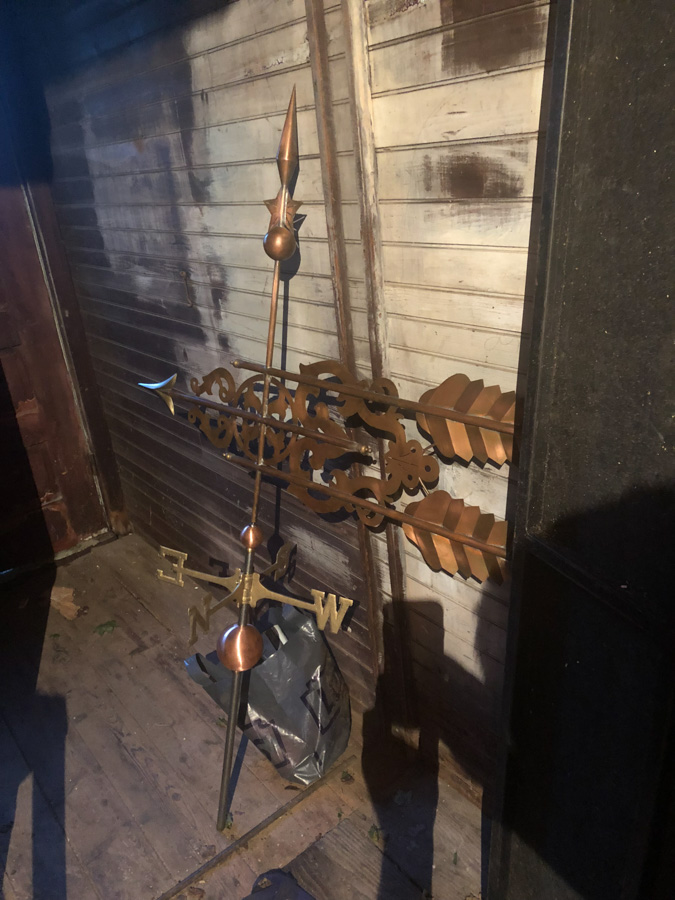
So the barn exterior is water tight but not even close to being complete. It still needs wood or copper gutters, lots of facia replaced, and the cupola needs to be re-slated. Now focus turns back to the house.
 The Holbrook House
Leave a comment